by mmk136 | Nov 19, 2025 | Uncategorized
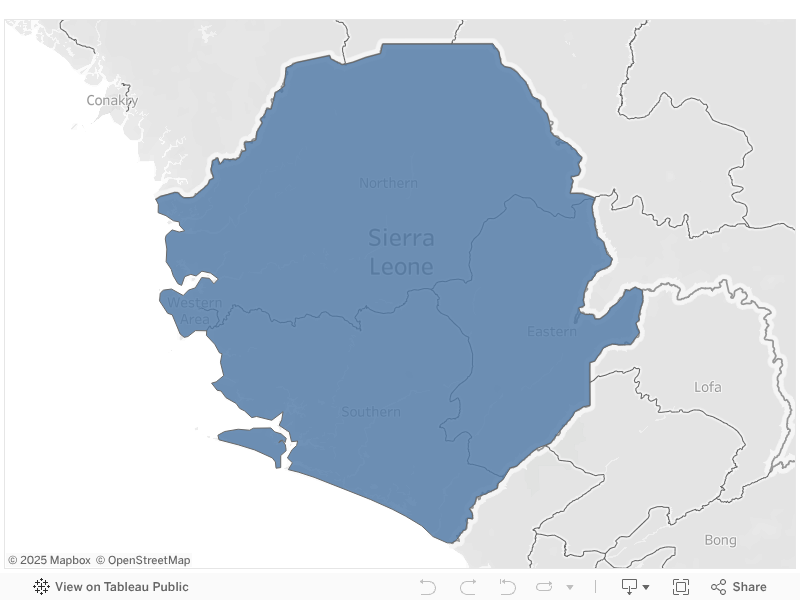
Sierra Leone is a small West African nation with a population of roughly 8 million people. Rich in natural beauty, cultural energy, and abundant resources. But behind the country’s potential lies a familiar struggle: an economy still leaning too heavily on a single sector. Agriculture has long been the backbone of national productivity, while mining, industry, and services often struggle to keep pace.
This structural imbalance has made Sierra Leone vulnerable, and nowhere was this more visible than in 2015, when the dual shocks of the Ebola outbreak and a collapse in global iron ore prices sent the economy into a tailspin. So, what exactly is going on beneath the surface? And what would it take to build a more resilient and diverse economy?
Agriculture consistently accounts for 50-63% of the GDP, leaving the nation vulnerable whenever farming seasons fail, prices fluctuate, or crises occur.
Industry is the most unstable sector, swinging wildly between 5% and 22%. And in 2015, it hit its lowest point, just 5% due to:
- The Ebola outbreak froze movement and production.
- A crash in global iron ore prices is forcing mining operations to shut down.
This year alone has exposed how dependent Sierra Leone’s industrial sector is on external forces.
Hovering between 28–36%, the services sector has been steady but sluggish, unable to compensate for weaknesses elsewhere. Together, these patterns reveal an economy that struggles to withstand shocks because it lacks balance.
A Way Forward: Building a Diversified Economy
If Sierra Leone wants long-term stability, it must diversify, plain and simple. That means:
- Strengthening industry
- Modernizing agriculture with value addition
- Expanding services and digital innovation
The proposed solutions are supported by real-world programs in Sierra Leone, confirming their credibility and feasibility.
- World Bank – Sierra Leone Economic Diversification Project
- Supports economic diversification beyond agriculture and mining.
- Strengthens SMEs, enhances value addition, and improves market access.
- Confirms agro-processing, service expansion, and SME support as national priorities.
- International Labour Organization – Opportunity Salone Programme
- Promotes youth entrepreneurship and job creation.
- Supports sustainable SME models and value chain development.
Validates the focus on integrating agriculture with industry.
The solutions are evidence-based, nationally aligned, partner-friendly, and feasible. But the question remains: how can Sierra Leone leverage these programs and data insights to fully unlock its economic potential?
by mhh76 | Nov 20, 2023 | Uncategorized
In a world where economic resilience is more crucial than ever, Lebanon stands as a testament to the enduring spirit of overcoming adversity. This blog post is a reflection and expansion of those insights, exploring how we can collectively work towards a more robust economy.
The Prelude: Reflecting on Lebanon’s Past Economic Successes
Our journey begins with a look back at Lebanon’s economic landscape, particularly around 2007 and 2008. During these years, Lebanon witnessed a remarkable phase of economic growth, thanks in large part to the collaborative efforts of the government, the central bank, and, crucially, the citizens. This era serves as a beacon of hope and a blueprint for what can be achieved through collective action and strategic economic planning.
The Current Scenario: Understanding the Crisis
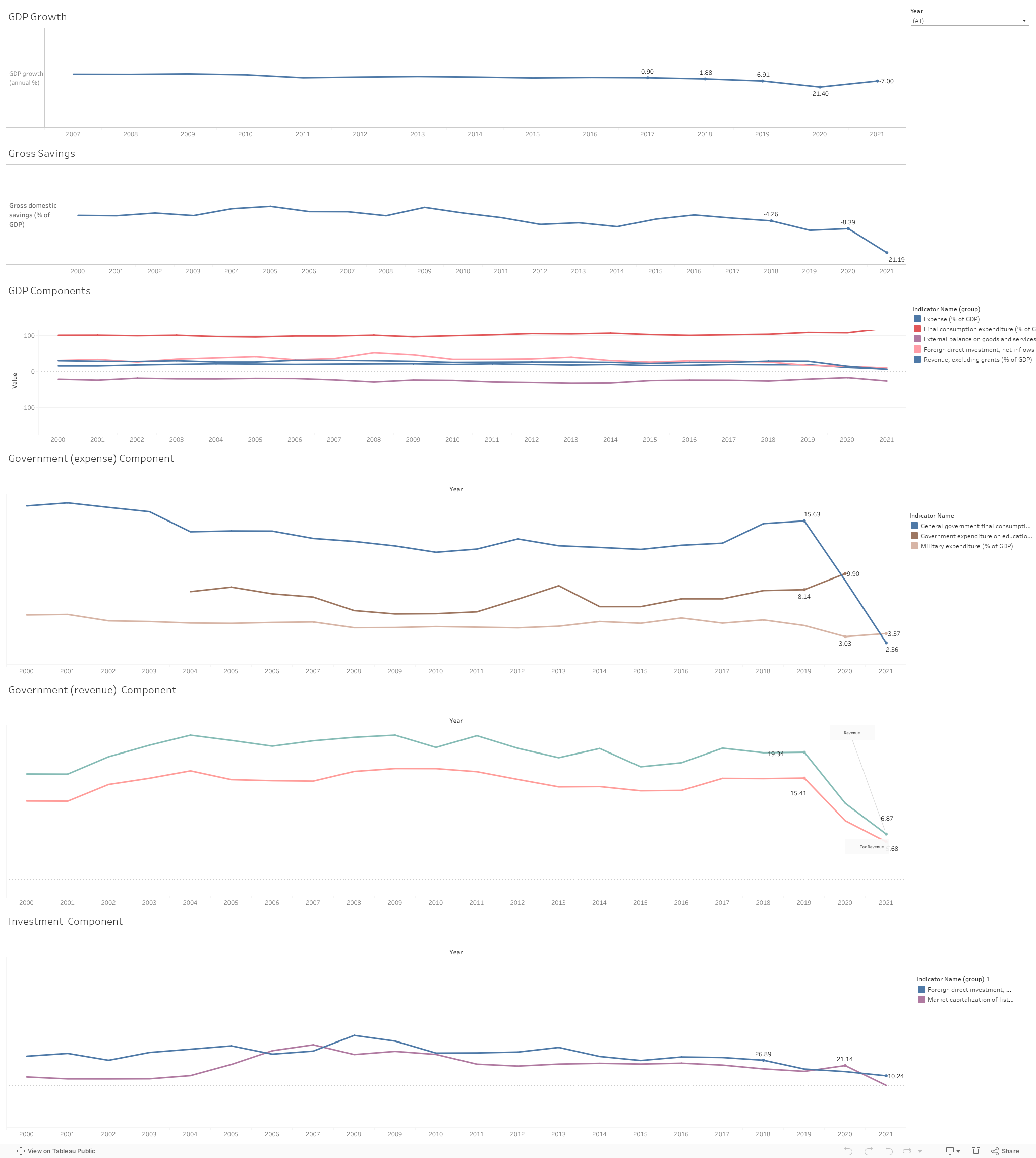
Fast forward to the present, and the picture is starkly different. Lebanon faces significant economic challenges, marked by a steep decline in GDP growth, particularly post-2018. The data paints a troubling picture: negative growth rates and a plunging gross domestic savings rate. These indicators are more than mere numbers; they are a reflection of a nation grappling with economic instability.
The Interplay of GDP and Savings: A Dual Focus
A key focus of our analysis is the interplay between GDP growth and savings. A thriving economy typically boosts savings, but the reverse is also true: economic downturns lead to decreased savings due to increased expenditures or borrowing. Lebanon’s current situation, characterized by a combined decline in GDP growth and savings, signals a need for urgent, targeted economic interventions.
Tackling the Crisis: Recommendations for Economic Improvement
The core of our discussion revolves around actionable recommendations to improve Lebanon’s economy. Drawing from past successes and current challenges, these recommendations include:
- Fostering Government and Central Bank Collaboration: Just as in the past, strong cooperation between these entities is vital for implementing effective economic policies.
- Empowering Citizens: Encouraging entrepreneurship, supporting local businesses, and fostering a culture of economic literacy can help citizens contribute more effectively to the nation’s economy.
- Strategic Economic Planning: This involves revisiting fiscal policies, exploring new avenues for economic diversification, and investing in sectors that can drive sustainable growth.
Conclusion: A Call to Action
As we stand at this critical juncture in Lebanon’s economic history, it’s imperative that we learn from our past, understand our present, and actively work towards a better future. The journey ahead is fraught with challenges, but also filled with opportunities for growth and resilience. It’s a journey that requires the collective effort of every Lebanese citizen, policy-maker, and stakeholder. Together, we can steer Lebanon towards a path of economic recovery and prosperity.

by hfc04 | Nov 20, 2023 | Dashboard, Visualization
SDG Goal 8: Decent Work and Economic Growth
You are probably aware of the United Nations 2030 Sustainable Development Goals. As a High School College Admissions and Career Guidance Counselor, you can play an important role toward achieving GlobalGoal 8, especially the target of full employment and decent work for all. You can help by providing students with data-driven advice about the jobs of the future. It’s important for students to think about their future careers not only in light of their interests, but also in light of which jobs are on the rise.
6 out of 10 workers will require training before 2027
The Future of Jobs Report by the World Economic Forum is one of the best publications that can help you provide students with scientific advice. It is a yearly publication, and the most recent version was published on May 2023. It brings together the collective perspectives of 803 companies, employing more than 11.3 million workers – across 27 industry clusters and 45 economies from all world regions. One of the most striking findings of the report is that 6 out of 10 workers will require training before 2027.This should give you an idea about the pace at which things are moving, and how drastic the landscape of the job market could be changing in the coming few years.
Cashiers, Waiters, Farmers, and Chief Executives are on the list of occupations with the largest job declines
You may have guessed that cashiers are on the list, but have you guessed that waiters and farmers are also on the list? How about Chief Executives? This is why you want reliable data and not intuition as the basis of your career guidance. One of the best resources that you can refer to is the Occupational Outlook Handbook by the US Bureau of Labor Statistics, particularly the Employment Projections (EP) which provides information about the US labor market for 10 years in the future. The Handbook is only about the US labor market, but it is still a very good resource that gives you insights into future trends regardless of where you are.
The 2022-2032 Employment Projections can definitely inform your high school students’ decisions when they start planning for their future careers. It gives an idea about which jobs are growing, and which jobs are declining.
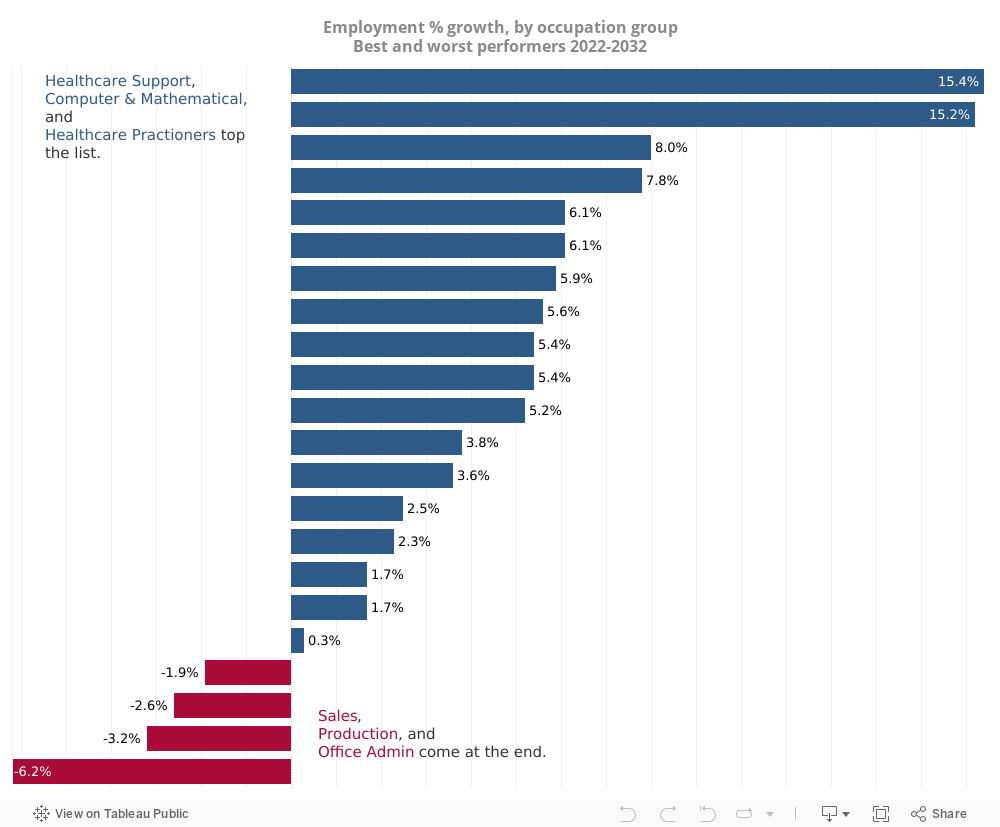
Healthcare and Tech are on the rise while Sales and Administrative occupations are declining
Let’s start with a macro-level picture of which occupation groups have the fastest percent growth, and which ones have the highest negative growth.
The fastest growing occupations
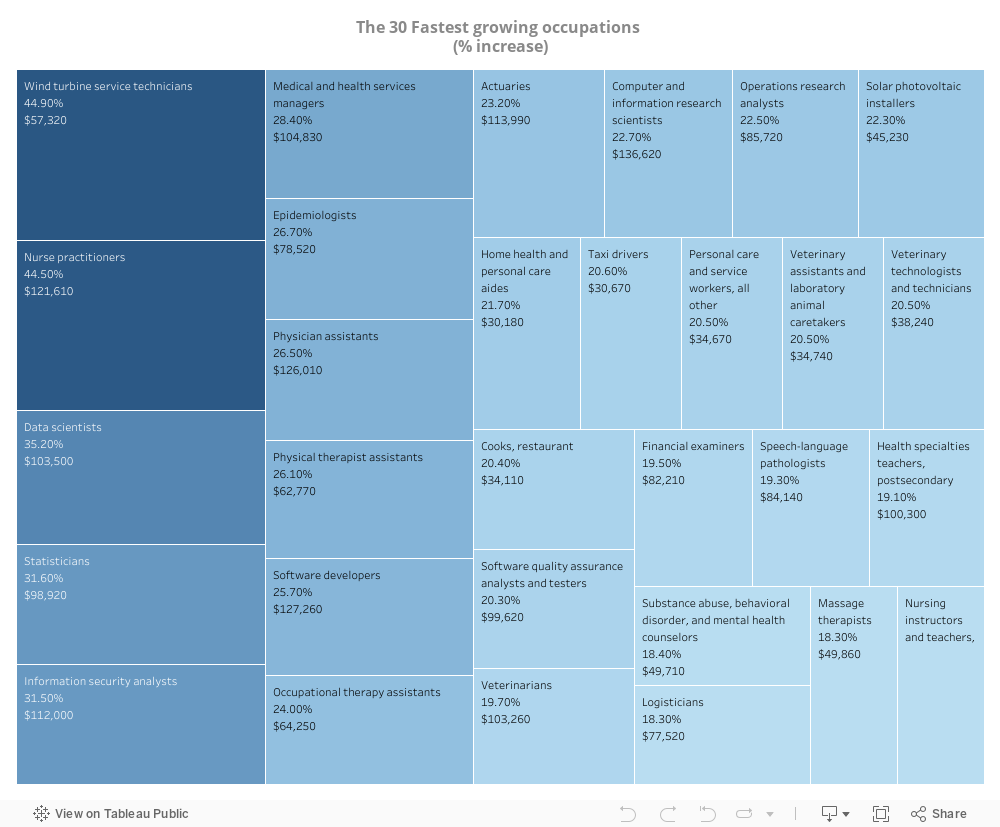
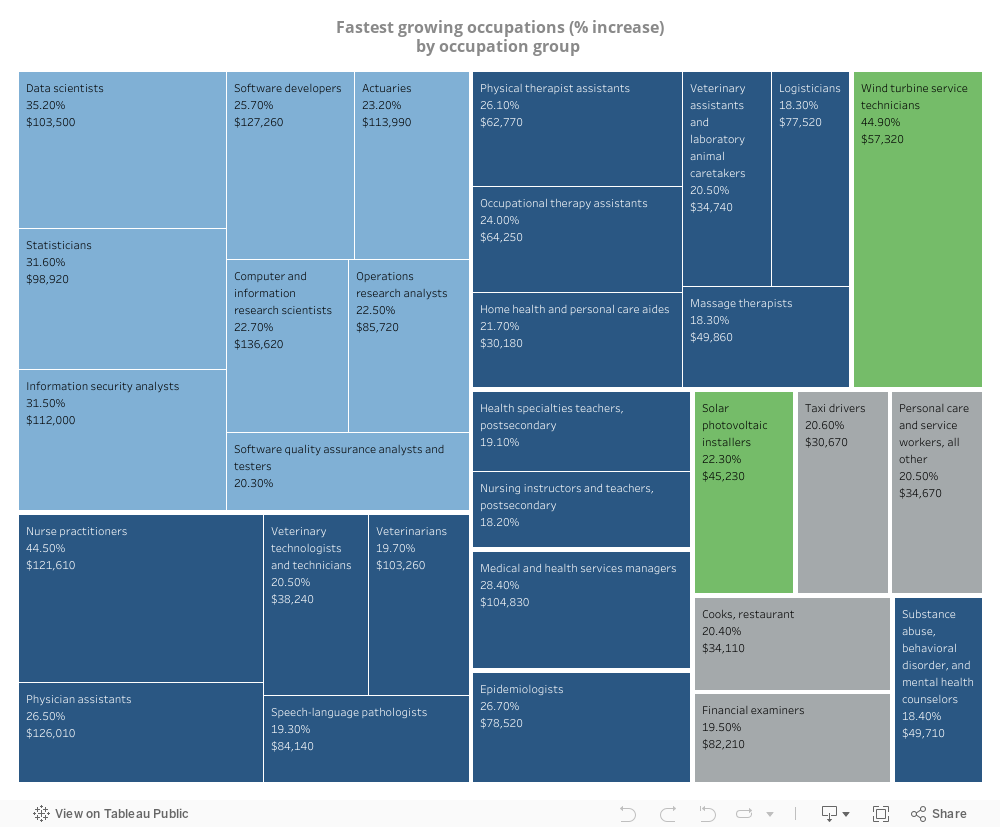
Now, let’s look more closely at the specific job titles with the highest percent growth, and let’s examine the median 2022 wage for these job titles. The top 3 places are: Wind Turbine Service Technicians, Nurse Practitioners, and Data Scientists. This is not very surprising because we know from the previous graph that healthcare and tech jobs are on top of the list of the most growing professions. We also know from the Future of Jobs report by WEF that green jobs are expected to grow more rapidly than other jobs which explains the presence of Wind Turbine Service Technicians on the top of the list.
Healthcare, tech and green jobs dominate the list
If we reorganize the treemap by occupation group, we’ll realize that 26 of the fastest growing jobs come from one of three categories; healthcare jobs (16), technology jobs (8), and green jobs (2). Looking closer at the list above reveals that there is a big discrepancy in the median annual wage among the the 30 fastest growing jobs. Computer and Information Research Scientists make a median annual wage of $36,620 in 2022, while Home Health and Personal Care Aides make only $30,180.
The top 10 paying jobs in the fastest growing occupations list
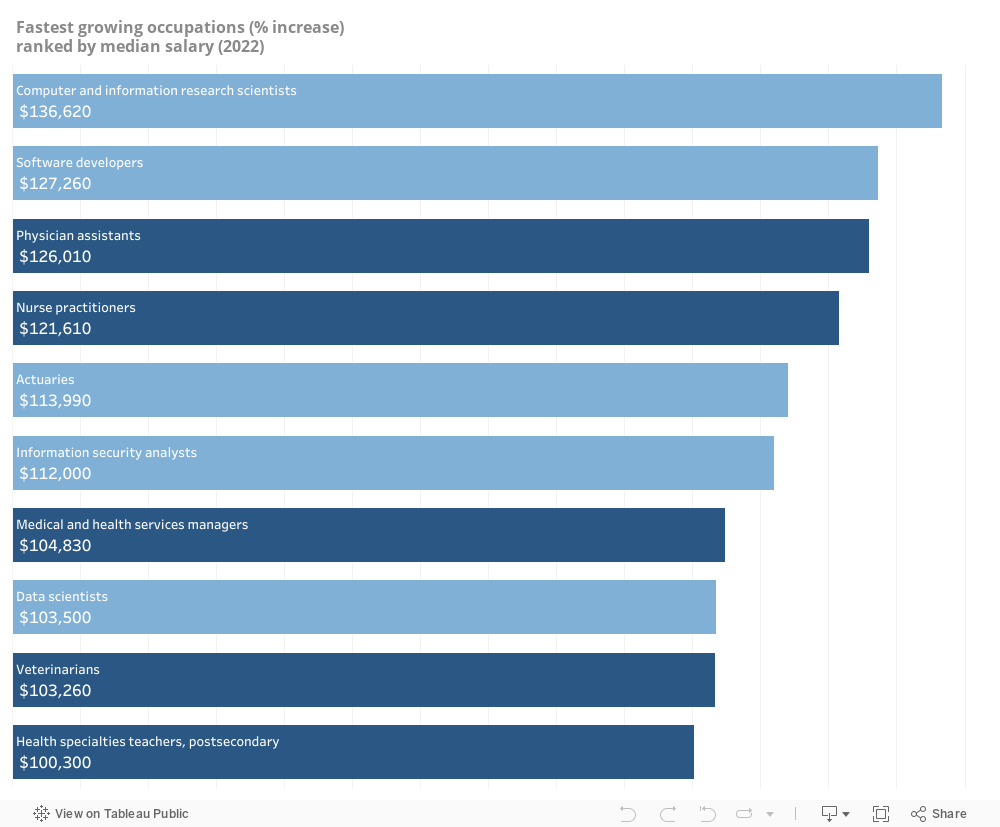
You are probably curious to know which fast growing jobs make the most money. Below is a list of the top 10 jobs in median annual wage among the 30 fastest growing jobs in the US. This list is now completely dominated by healthcare and tech jobs with equal share for both.
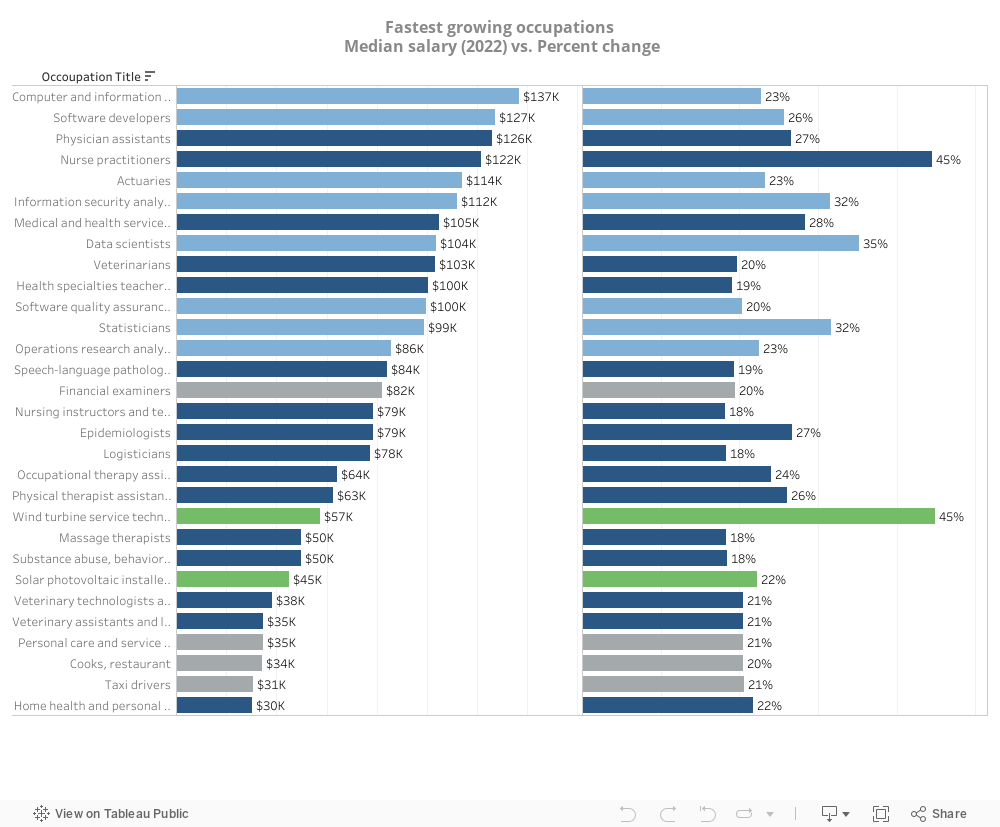
Below is the full list of the fastest growing jobs ordered from the highest median annual wage to the lowest, with the expected percent increase between 2022 and 2032. It looks like Nurse Practitioners will enjoy very high demand (45%) and a very high median pay ($121,610).
STEM vs no-STEM
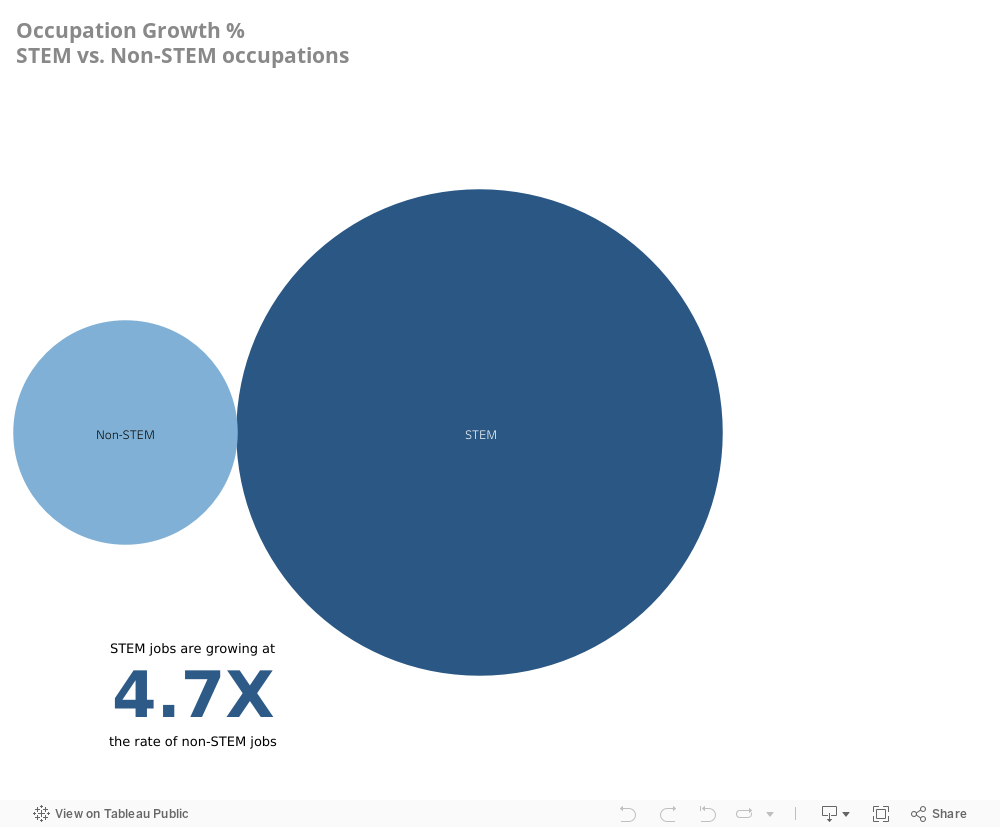
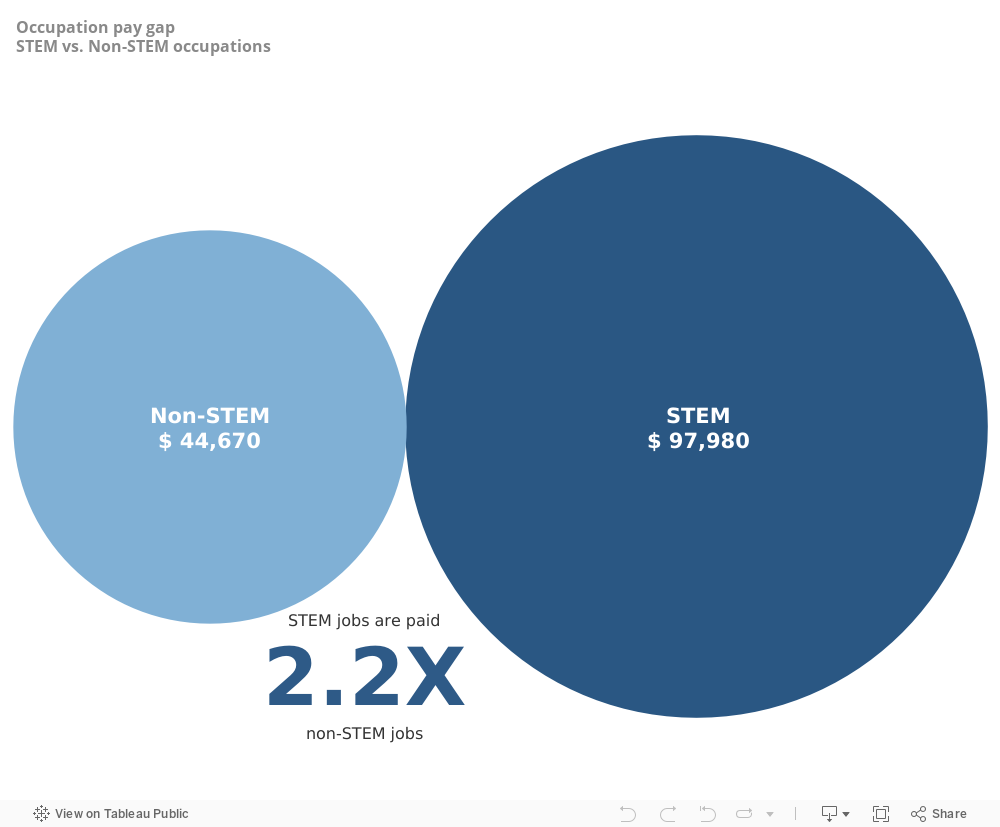
It’s probably clear by now that there is a huge gap in demand and pay between jobs in Science, Technology, Engineering, and Mathematics (STEM), and non-STEM jobs.
STEM jobs are growing at 4.7X the rate of Non-STEM jobs.
STEM jobs are getting paid 2.1X as much as Non-STEM jobs.
It is in fact overwhelming to ask an 18-year old to choose his or her future career path, but isn’t that what happens when they write their college applications? Students are usually asked to select the major or at least the school (faculty) to which they would like to apply. While a student can always change his/her major in theory, things can get complicated in reality. Say a student is very interested in humanities and engineering. If the student decide to apply to a humanities major but later finds out about this pay gap between engineering and humanities after she is already enrolled in college, it may not be possible for her to transfer from the faculty of Arts and Sciences to the faculty of Engineering. So, it’s critical to provide students with all the information and allow them to take data-informed decisions that incorporate the future projections of the job market into consideration.
by mha108 | Nov 19, 2023 | Uncategorized
Inflation Rate in The Arab World:
The map above illustrates the inflation rates in the Arab world in 2021, with Lebanon and Sudan registering the highest percentages of inflation. Inflation is an increase in the level of prices of the goods and services that households buy.
High inflation reduces the purchasing power of money, making goods and services more expensive. This erosion of purchasing power is particularly challenging as it diminishes the real value of the currency, leading to a noticeable decline in the standard of living for individuals and restraining their ability to afford essential goods.
Negative GDP Growth Adds Another Layer of Challenge to Lebanon and Sudan:
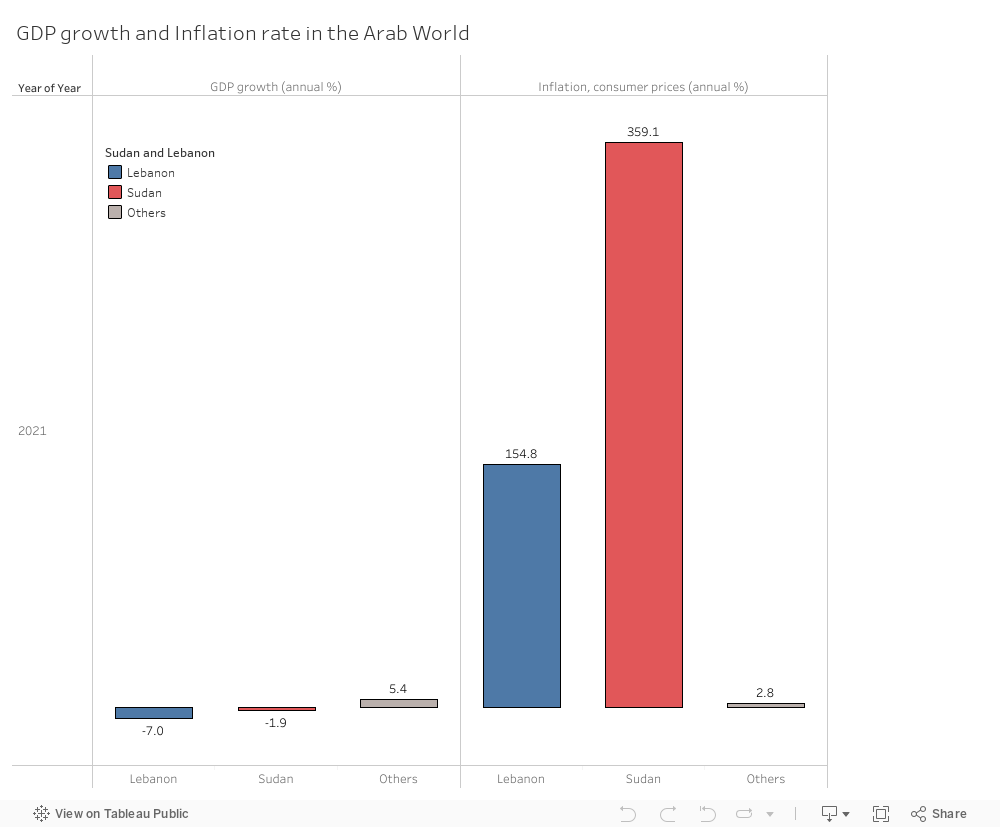
The bar chart shows the GDP growth and inflation rates across Lebanon, Sudan, and other Arab countries in 2021. GDP growth, or Gross Domestic Product growth, represents the percentage change in the total value of goods and services produced within a country. In the context of the chart, the negative GDP growth in Lebanon and Sudan underscores a formidable challenge. Negative GDP growth occurs when an economy contracts, producing fewer goods and services than in the previous period. This contraction, coupled with soaring inflation rates as evident in the chart, adds another layer of complexity to the economic challenges Lebanon and Sudan are facing. A shrinking economy impacts employment, investment, and overall economic well-being, making it imperative for policymakers to address these dual challenges with targeted and effective strategies.
Emulating China’s Success: A Blueprint for Economic Diversification and GDP Growth
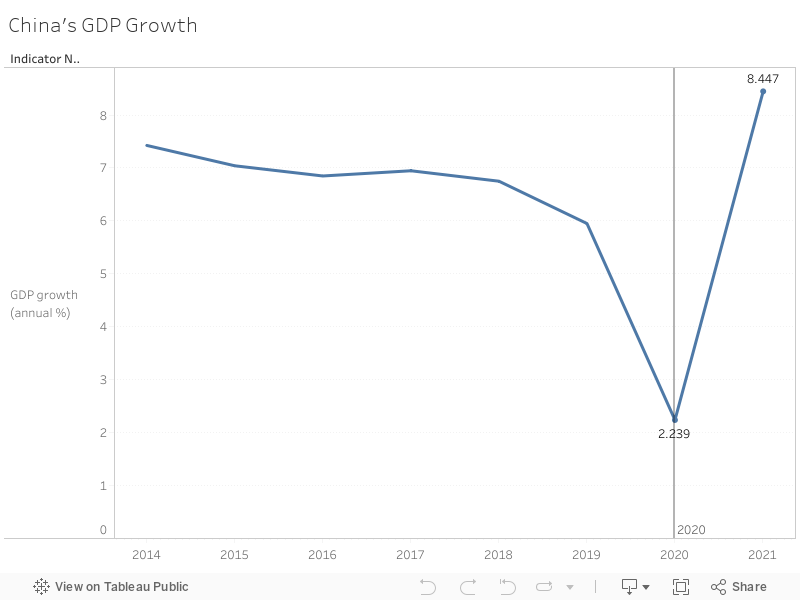
As seen in the line-chart above, The GDP growth in China has significantly increased starting 2020. China’s extraordinary economic growth can be attributed to a strategic blend of market-oriented reforms and targeted initiatives.
Diversifying the economy played a pivotal role, as the country shifted from an agrarian focus to developing various industries, such as reducing state control, encouraging private businesses, and welcoming foreign investments.
China’s success story underscores the effectiveness of a multifaceted approach, combining diversification with reforms that prioritize efficiency, global integration, and sustained economic planning.
by msh57 | Nov 19, 2023 | Uncategorized
Saudi Arabia Economic Diversification
KSA’s Sharp GDP Drop
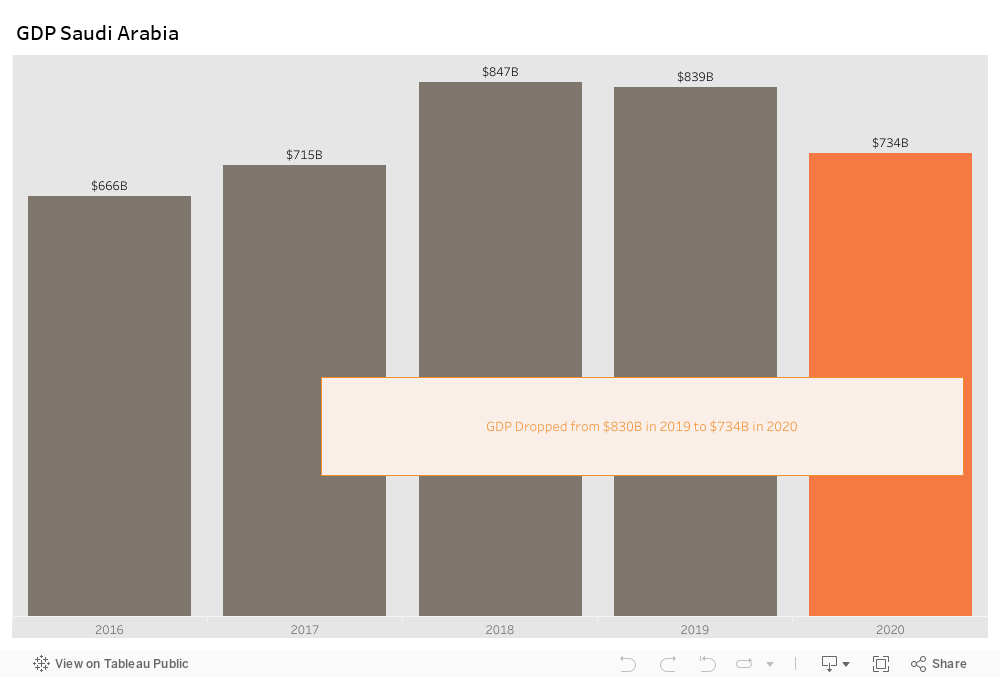
´In 2020, Saudi Arabia experienced a significant drop in its Gross Domestic Product (GDP), primarily due to the dual impact of the COVID-19 pandemic and a sharp decline in global oil prices since Saudi Arabia is a major oil-producing country, and its economy is heavily dependent on oil exports whre the global oil market experienced a sharp decline in prices due to a combination of factors, including reduced demand during the pandemic and a price war between major oil-producing nations.
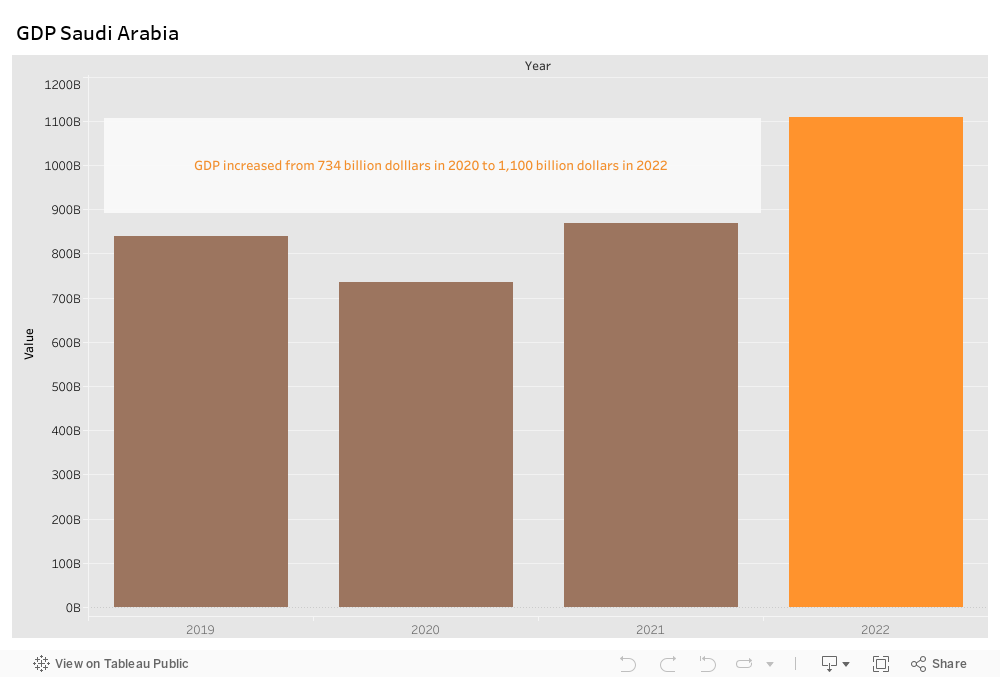
´The above plot shows the sharp GDP drop from 840 billion dollars in 2019 to 730 billion dollars in 2020. According to several Saudi Arabia’s government, this was due to the decline of global oil prices.
Potential Solution
´The Solution is Diversifying the Saudi economy away from its heavy reliance on oil and investing in non-oil sectors like tourism, technology, and manufacturing and other sectors, Thus approaching the problem of GDP discussed, the government decided to invest in a non-oil sector that is the industrial sector and increase the manufacturing rate of several products which aims to diversify the economy of Saudi Arabia instead of only depending on oil and gas production.
KSA goverment invested in manufacturing such as petrochemical complexes: development of petrochemical complexes that can produce a wide range of products, including plastics, fertilizers,…
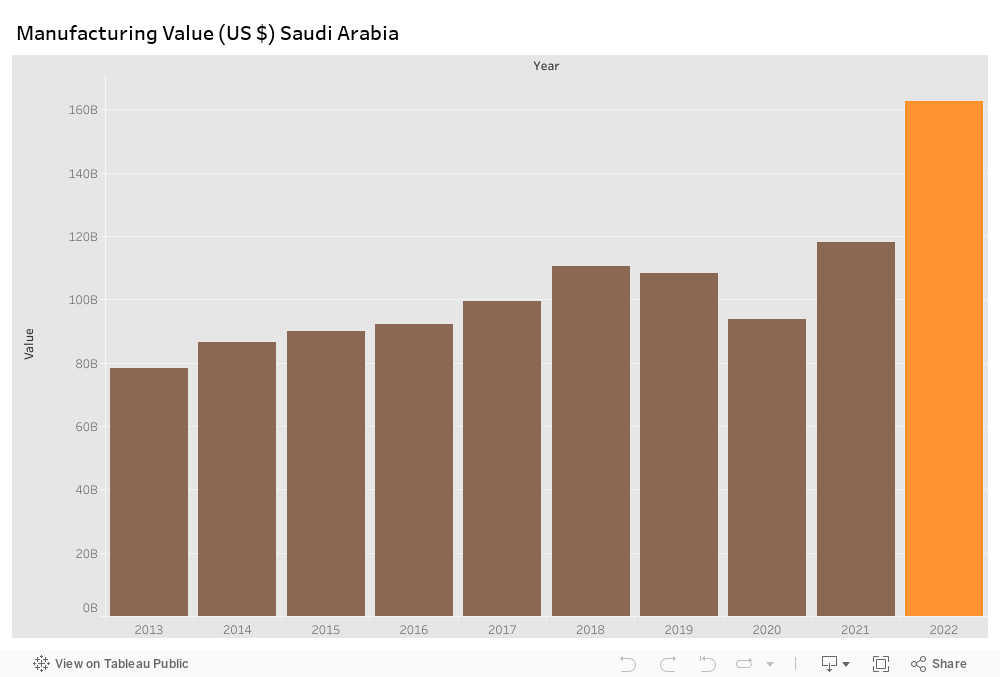
´This plot shows the increase in the manufacturing value from 93 billion dollars in 2020 to 163 billion dollars in 2022 after increasing the investment in this industry.
Findings
´After 2 years of applying diversification and investing in a non-oil industry we noticed a sharp improvement in the gross domestic product(GDP) which highlights the importance of the initiative we took.
Solution Validation
The Dashboard below shows that the solution proposed was a direct cause for GDP increase between 2020 and 2022.
Conclusion
Economic diversification is a multifaceted process that offers numerous advantages, including increased resilience, job creation, and sustainable development. While challenges exist, the potential long-term benefits make diversification a valuable strategy for countries seeking to build robust and adaptable economies