by rah122 | Nov 20, 2025 | Uncategorized
It is 2015, Samer (13-year-old), just got from school with a strong fever, headache, and tiredness but what was different is the swelling around his jaw area. His parents took him to the doctor and he was diagnosed with Mumps.
Days later, the school notified all parents of an outbreak in Mumps among students. And what was a school-level problem turned out to be a result of a nation-wide outbreak.
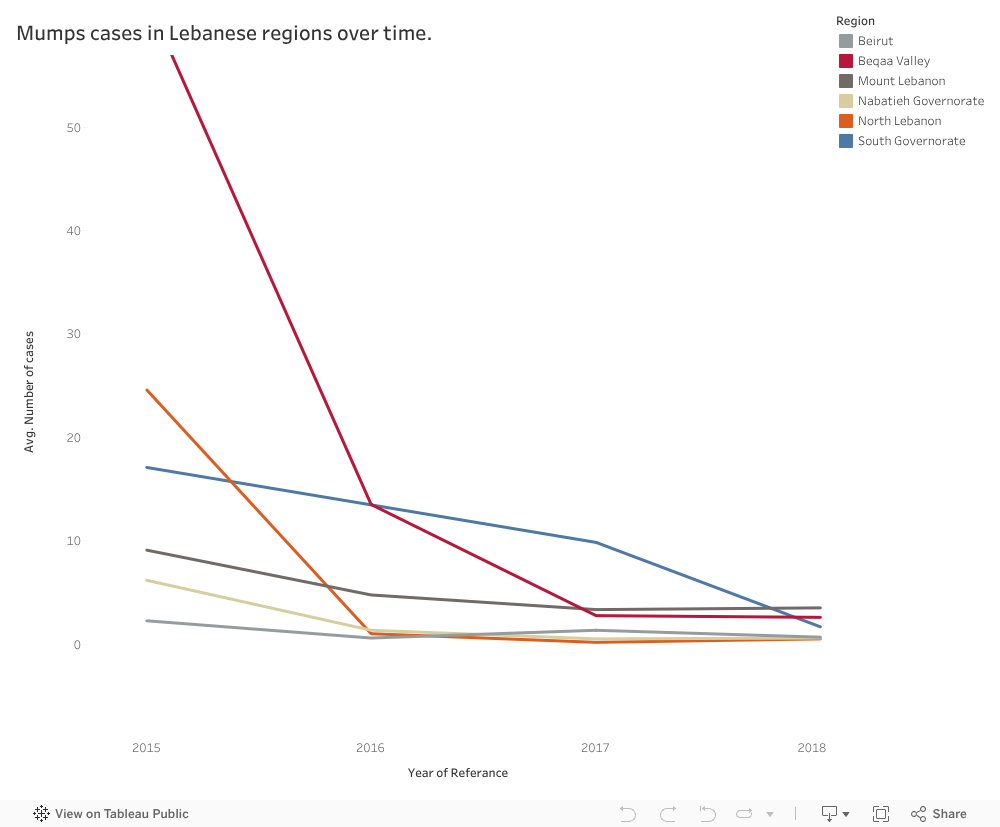
This line graph shows how the number of recorded Mumps cases in 2015 was higher than the years that followed, and this was caused primarily by outbreaks in certain governorates. For example, in 2015 each town in Beqaa valley recorded 62.5 Mumps cases over the year, another example is North Lebanon, were each town recorded on average 24.58 Mumps cases over the year.
However, after Samer, his friends and a big portion of the Lebanese citizens got vaccinated against this disease, we can see the success of those vaccination campaigns in the following years (2016, 2017, and 2018) were Mumps cases gradually decreases to reach almost zero records in towns of every governorate.
Since this shows that the authorities were able to make impact in preventing and controlling outbreaks between 2015 and 2018, then they should make sure that similar measures are constantly being implemented.
Because Mumps has a negative effect on the patient’s health, and is visible in the face region which can be mentally scarring.
The approach Ministry of Public Health must take is having a preventive plan instead of a reactive one to eliminate Mumps’ outbreaks. And this can be done through a set of actions:
- Ensure ahead of time that vaccines are available at health centers before the actual date of vaccination.
- Follow closely the progress of vaccination campaigns, especially in governorates with higher tendency for outbreaks.
- Increase awareness concerning this disease and the importance of being vaccinated.
- Benefit from lessons learned in campaigns done previously for Mumps especially between the 2015-2018 period, and how outbreaks were dealt with.
Taking those recommendations along with insights from specialists in the field will allow the MoPH to ensure the safety of citizens by preventing them from such harmful diseases. This way Samer and his friends don’t have to go through this disease that is harmful physically and disturbing.
by aed05 | Nov 20, 2023 | Dashboard, Visualization
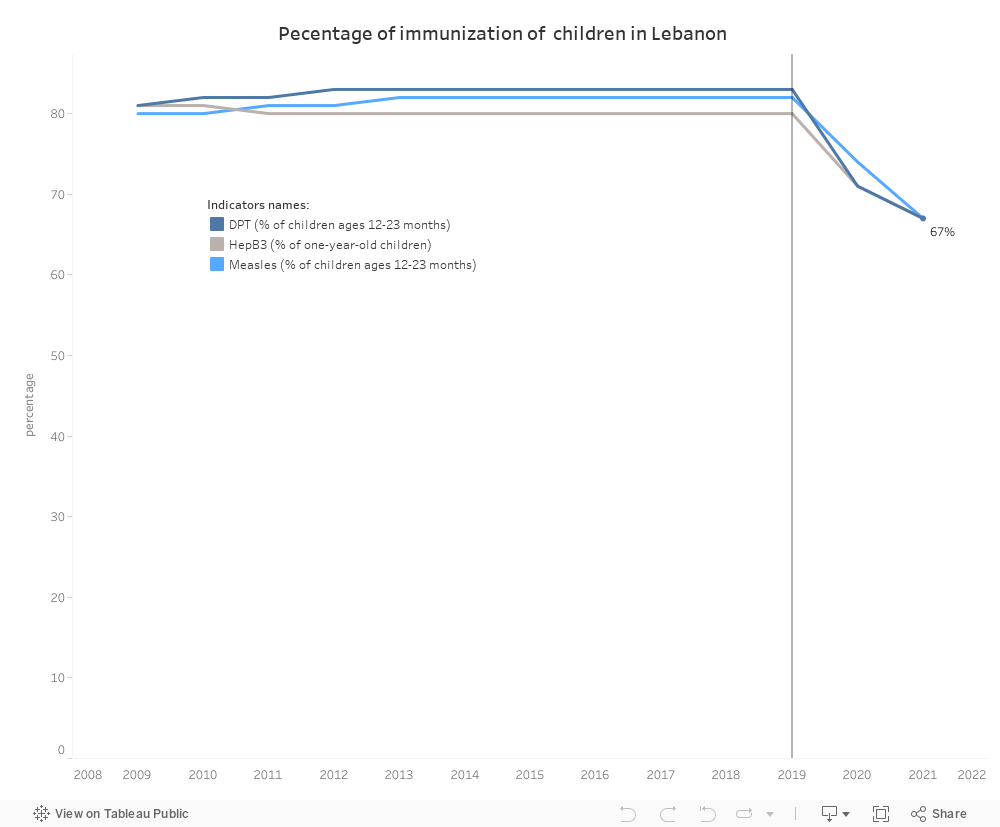
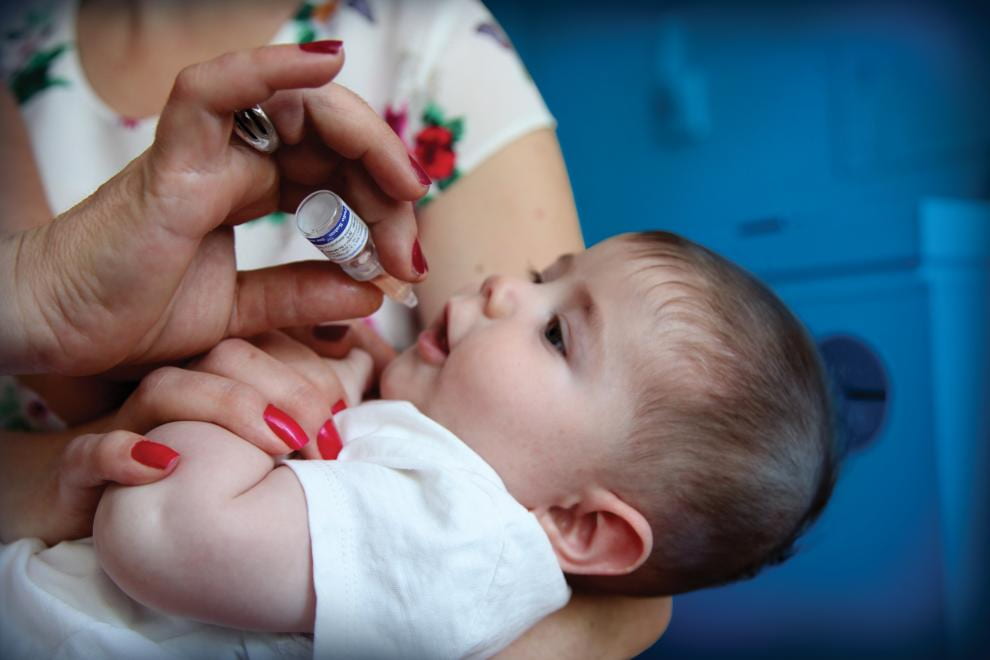
In 2020, Lebanon witnessed a substantial decrease in the percentage of immunization against Diphtheria, Pertussis, and Tetanus (DPT), Hepatitis B (HepB3), and measles among children aged 12-23 months. After more than ten years of stability, the immunization rate dropped to 67% in 2021, marking its lowest point in recent history.
Standing Out in a Global Context of Decline:
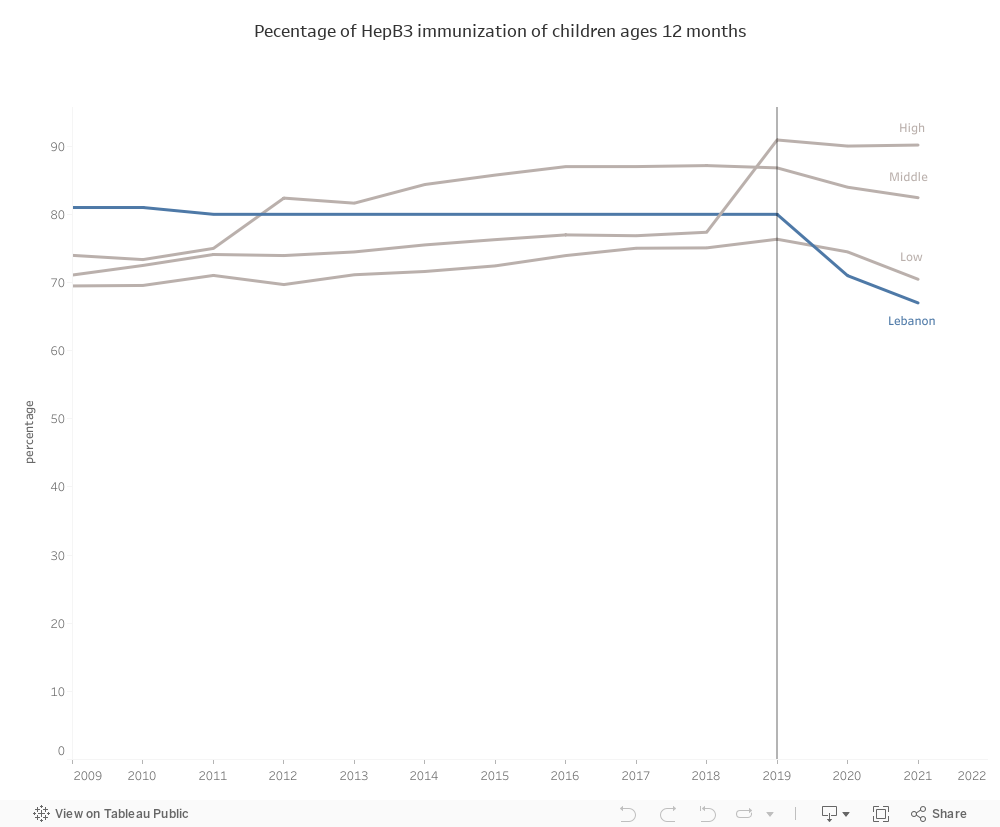
While middle-income and low-income countries experienced a decrease in immunization percentages in 2019 and 2020, Lebanon stood out with the most significant decline. Comparatively, when pitted against low-income, middle-income, and high-income countries, Lebanon witnessed the highest decrease in the percentages of DPT, Measles, and HepB3 immunization during these pivotal years.
This raises crucial questions about the specific factors contributing to Lebanon’s distinct challenges in maintaining essential childhood vaccination rates.
Economic Struggles Impacting children Immunization:
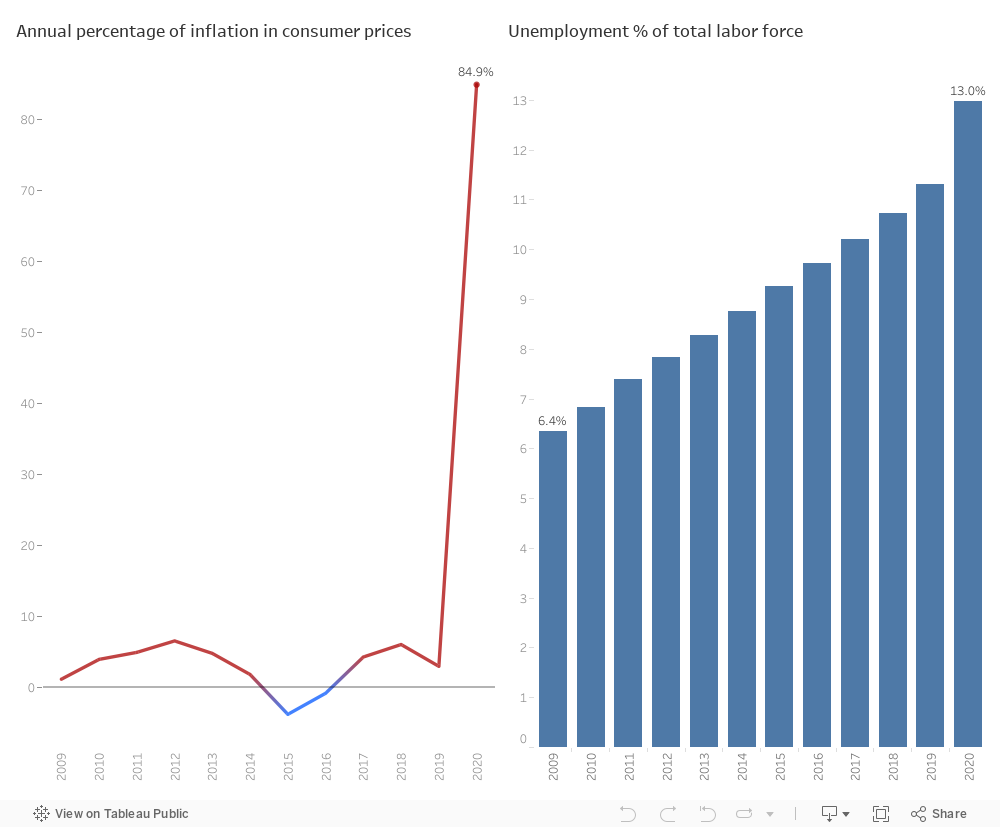
In 2019, Lebanon experienced a significant economic crisis, resulting in widespread job losses, with the unemployment rate reaching 13% by 2020. The cost of everyday items surged, approximately 85%, creating substantial challenges for individuals to afford medical expenses and seek necessary healthcare. Accessing healthcare has now become a luxury for many citizens, including children, as parents prioritize essential goods over vaccinations for their kids.
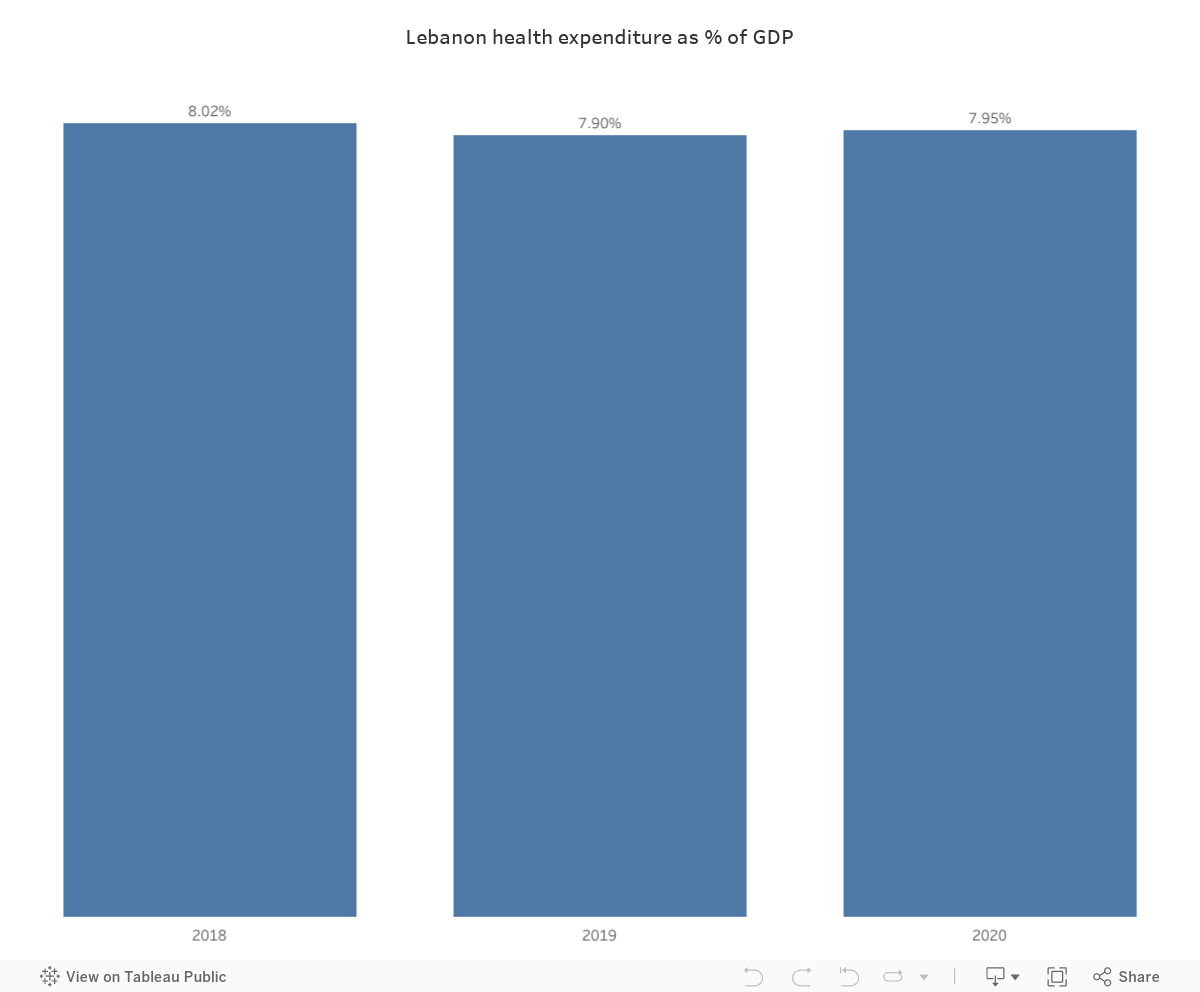
In addition, the Lebanese government allocated similar resources in Lebanese Lira to its healthcare system in 2019 and 2020 as it did in 2018. However, the impact of inflation eroded the purchasing power, diminishing the effectiveness of the government’s support, especially given that healthcare costs are often priced in US dollars.
Shielding the Health of the Lebanese :
In the world public health, the ramifications of low vaccination rates against DPT , Measles and HepB3 are far-reaching and dire. The repercussions extend from the heightened risk of individual health issues to the vulnerability of entire communities facing outbreaks. These outbreaks not only strain healthcare systems but also impose a substantial economic burden, creating a global health threat. The gravity of these consequences becomes most evident in the specter of preventable deaths looming over communities.
Recognizing the gravity of these consequences, urgent action is essential. The government must increase its investment in vaccination programs, ensuring free and universal accessibility. It should collaborate with international entities such as World Health Organization and NGOs to get financial support.
These efforts will not only promote individual well-being but also strengthen the communal defense against potential outbreaks, paving the way for a healthier and safer future for all.