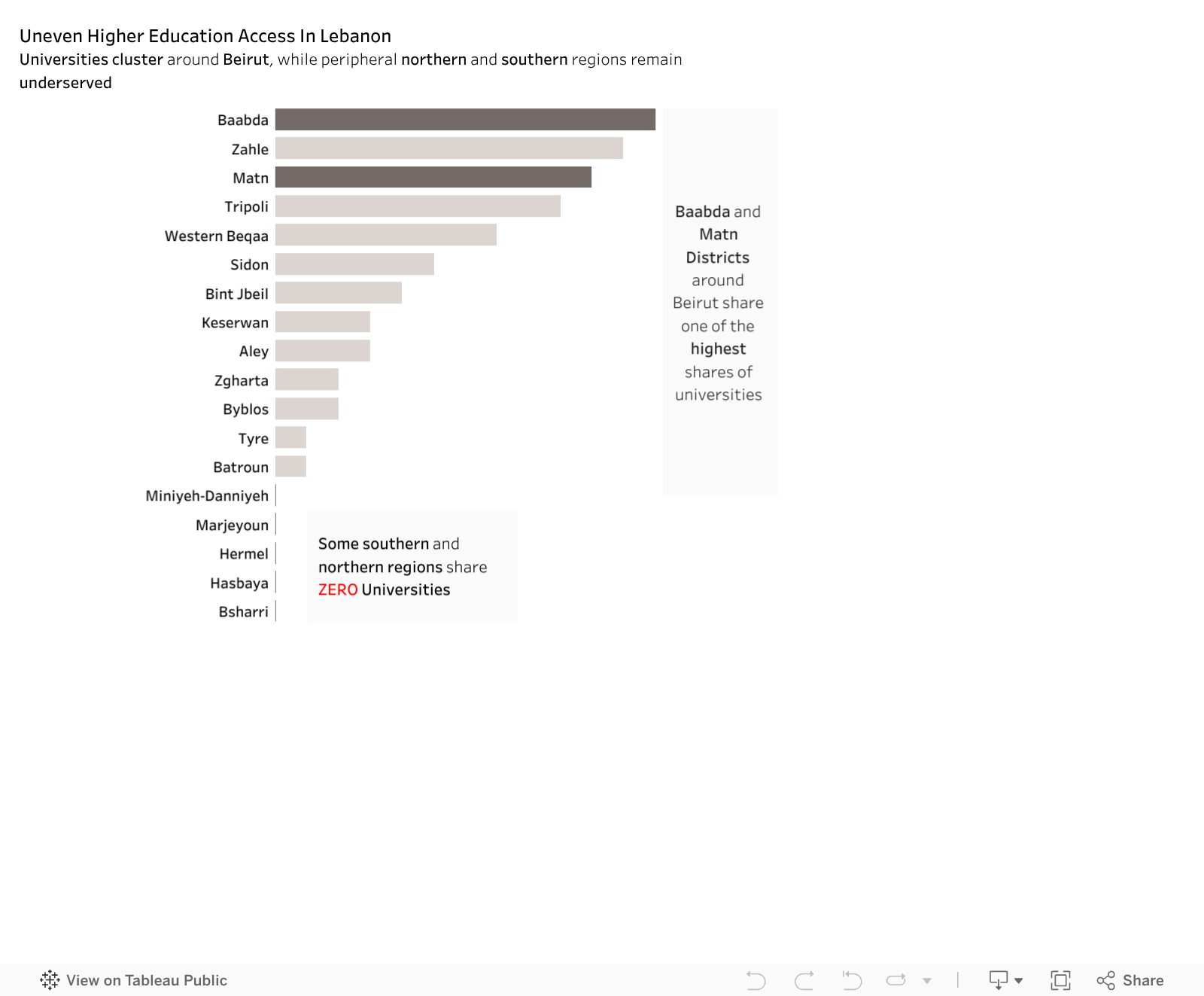
Lebanon: an unequal geography of Education
I will never forget his name.
Omar. He was about my age, walking around the street and asking for directions. He stopped me but I didn’t know the place, so I suggested trying it on Google Maps to see if he can find it. Omar looked at me, embarrassed, and told be he couldn’t do that. Why? Not because he didn’t have a phone, he did. Not because it didn’t have power, or connection, it did. But because he didn’t know how to read and write.
I consider myself to be one of the lucky ones.
I grew up in a world where education is a given, not a luxury, where graduating is a rite of passage not a privilege, where going to university is the norm, not the exception. I am one of the lucky ones because I never had to question all of this as a child. I never had to think about my life as being anything else than going to school. People like you and me, we forget that some people don’t know how to read, some barely know how to count, some stopped going to school at 12 years old. We take it all for granted. But when reality hits you like that, everything shatters. Today, I remind you of them, of the Omars of the world. We need to act now, today.
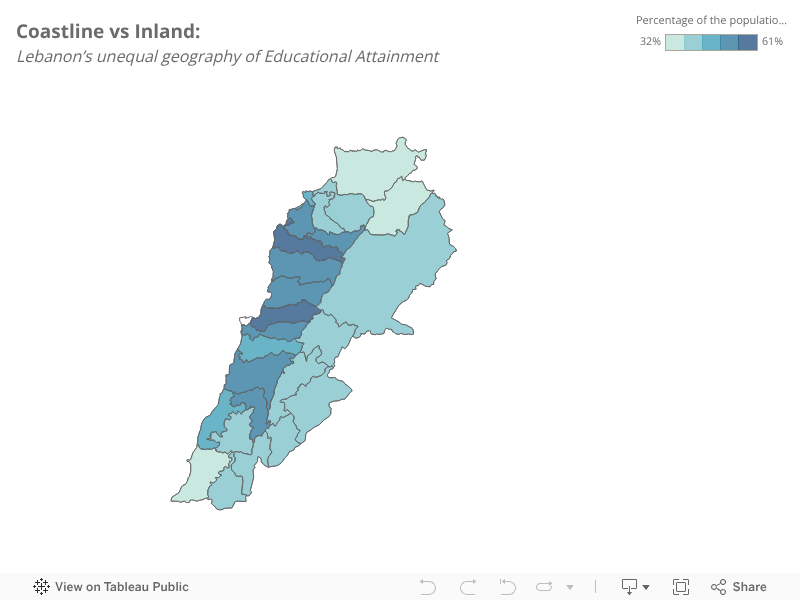
In Lebanon, where you live still decides what education you get…
But how can all of this be explained? What influences such disparity? What are the factors at play? These questions needed to be answered to find out the next course of action. The common denominator? The gap between the private and the public sector. It’s where inequality starts brewing.
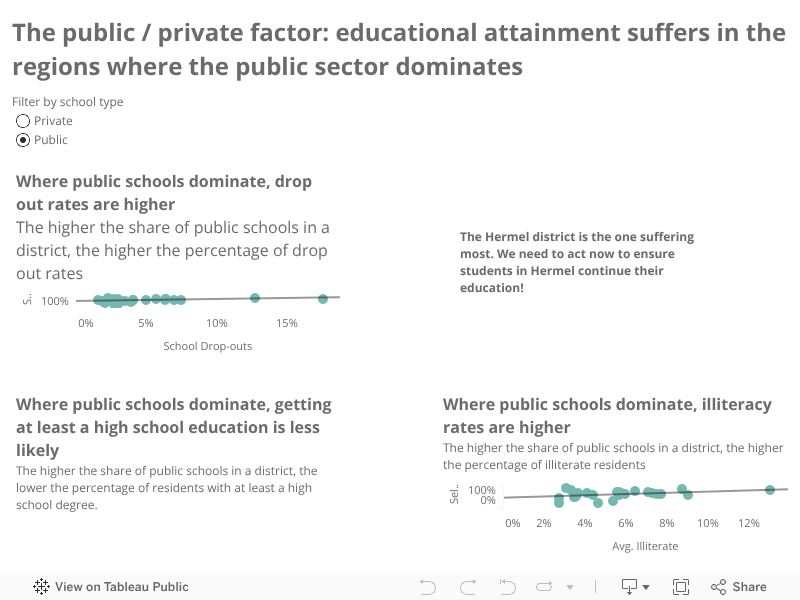
In the districts where the share of public schools is higher, the percentage of residents with at least a high school degree suffer and both drop-out rates and illiteracy rates grow. As such, the higher the percentage of private schools in the district you live in, the more likely you’ll make it to university. But, private education is expensive and not accessible to everyone, and getting public schools to catch up to the level of private ones takes a lot of time and requires a very big investment.
In the meantime, thousands of students are abandoning their studies… We need to bridge the gap, and fast.
Educating about Education in the public sector.
The first step is awareness. We need to educate public students on the importance of continuing their education. If they don’t know why they should go on with their studies, then anything else we try, will fail. Through my NGO, I developed a program that we would like to test-run.
Our program is three-fold:
- Highlights the importance of continuing an education and the long term benefits it provides.
- Addresses the reasons why public school students typically abandon their studies, suggests solutions and frames education within those issues.
- The program will be repeated and updated as students get from elementary to intermediate to secondary to assess new concerns tied to the evolving context in Lebanon, age-related concerns.
To do that, we need the ministry of education’s approval to begin activation within public schools. Ideally, we would like to start with Hermel, which is the biggest problem area, as it is the worst across in all 3 key measures. This ensures at the same time, that we maximize the number of students we’ll be able to help.
Equal access to education should not a child’s naive idea of reality, it should be the norm. I ask you to say yes, not for me, but for all for all the kids out there who won’t get a proper education because they were born in the wrong place. For those who have enormous potential, but will never get to reach it. For those who should have gone on to do great things. For Omar. For all the kids who were born a few kilometers inland.