by gwk01 | Nov 23, 2021 | Visualization
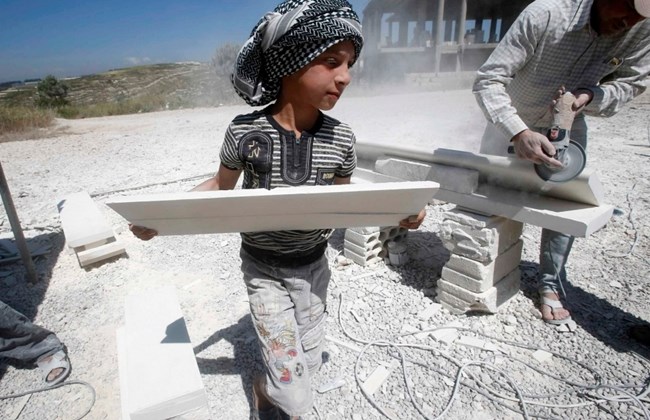
It was 11:00 am on a Monday when I saw a nine-year-old boy, Bilal, lifting heavy rocks in a construction site. How many Bilals, children who toil long hours for a low wage, deprive themselves of education, and endure frequent violence and abuse just to financially support their families, do we meet daily?
Based on a study conducted by the Lebanese ministry of labor in 2013, there are almost 180,000 children working in Lebanon. Today, Lebanon is experiencing a huge decline in its gross domestic income (GDI). GDI is an economical metric that showcases the nation’s social welfare, and its deterioration results in more people living below 50% of the median income, and vice versa.

Thus, poverty is increasing in Lebanon, and more children as Bilal are being robbed of their childhood. The Lebanese government and supporting international organizations can take many initiatives to save Bilal and his friends; however, not all might have a fast and radical impact on the children labor phenomena. While observing international cases, through World Development Indicators dataset, I noticed that countries, which most of their population have access to electricity, have a lower percentage of poverty; thus, a lower number of employed children, and vice versa.

When power resources are available to the nation, people will have access to technologies, especially the internet. There are numerous internet usages that can create life opportunities for the individuals; for example, Bilal can access the internet to enroll in educational programs.

Considering the above, I appeal to the government and concerned institutions to utilize all their endeavors in providing a sustainable electrical solution for our children to live a “normal” life and have the chance to prosper.

by Makram noureddine | Nov 20, 2021 | Dashboard, Visualization
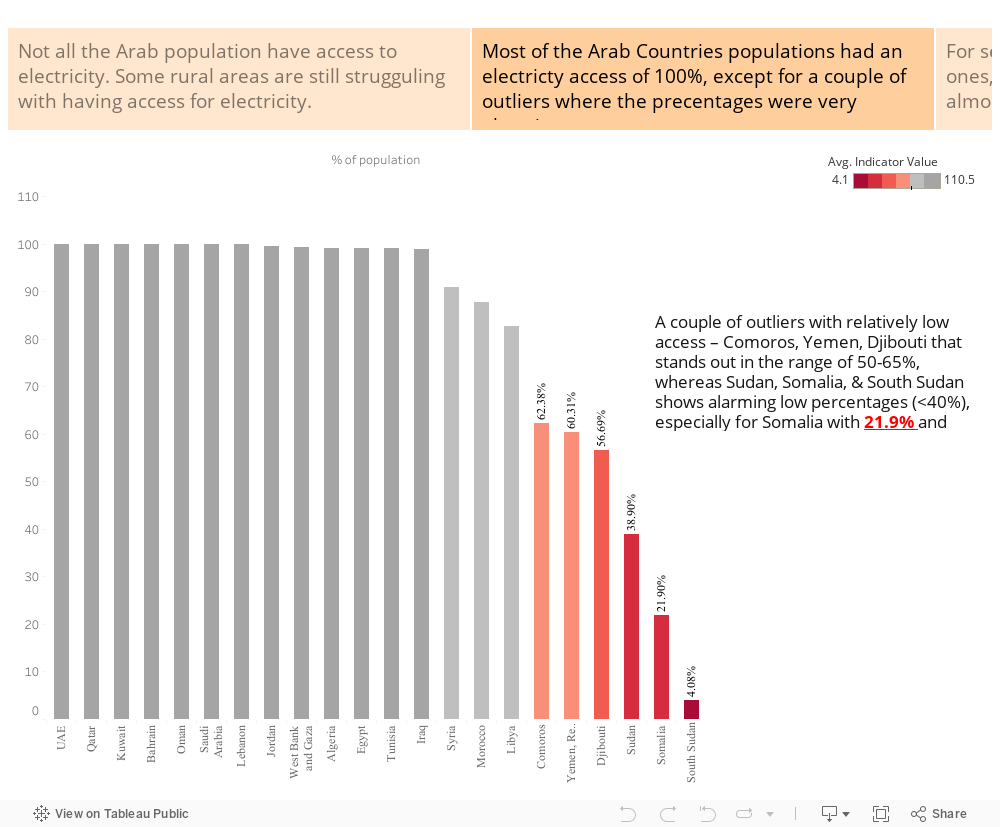
In a world where access to electricity is no longer considered a privilege but a basic human right, many Arab counties are still struggling in providing electricity access to their people. Even though the Arab world is often associated with energy wealth in terms of oil gas production, not all the population has access to electricity. Many Arab Countries such as Comoros, Yemen, Djibouti, Sudan, Somalia, & South Sudan, are still lagging behind in terms of the population access to electricity.
However, it is important to distinguish between access to electricity and its availability. For example, in counties such as Lebanon, Syria, and West Ghaza, most of the population has access to the electricity grid, but it is not always available. Private generators are considered as an alternative solution to provide power, as rolling blackouts are common.
Global institutions including the World Bank and International Energy Agency are all working towards global solutions to help less developed countries in their struggles towards proving electricity to their people. By 2030, the United Nations sets a goal to measure progress against its Sustainable Development Goal #7—“affordable, reliable, sustainable and modern energy for all”.
by Abbas Nassereddine | May 4, 2020 | Visualization
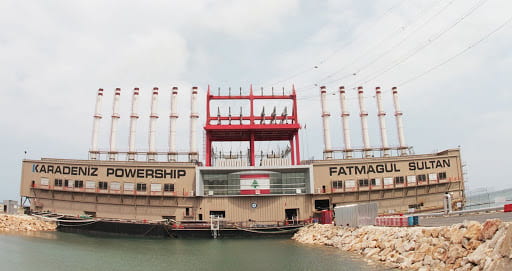
With growing power demand, Lebanese authorities decided to deploy powerships (Karpowership) in June 2012. These powerships remain a subject of debate among Lebanese officials to date. The visual portrays the effect of the introduction of the powerships on the distribution of contribution of different Non-EDL power sources to the Lebanese electricity network.
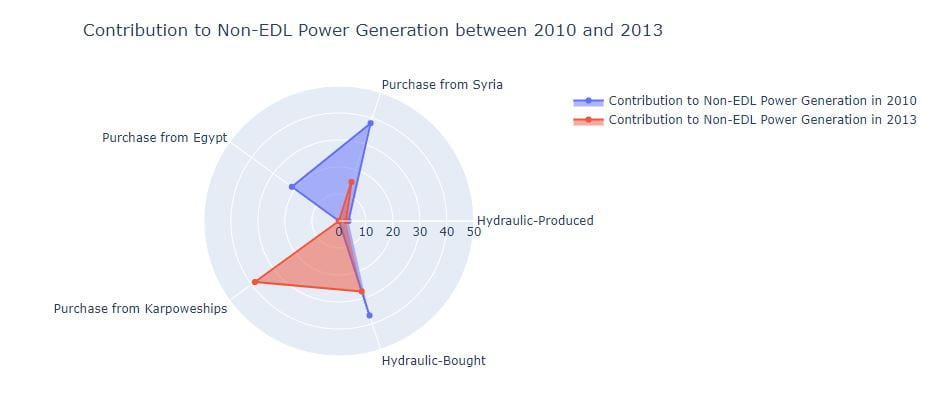
A significant drop in the contribution of foreign supply (Syria and Egypt) as well as the contribution of Hydraulic power generation was witnessed in 2013, in comparison to the significant emergence of powerships as main contributors (40% of Non-EDL power generation). Powerships continue to raise eyebrows regarding their cost efficiency and environmental friendliness in comparison to the other power sources.