by mmk136 | Nov 19, 2025 | Uncategorized
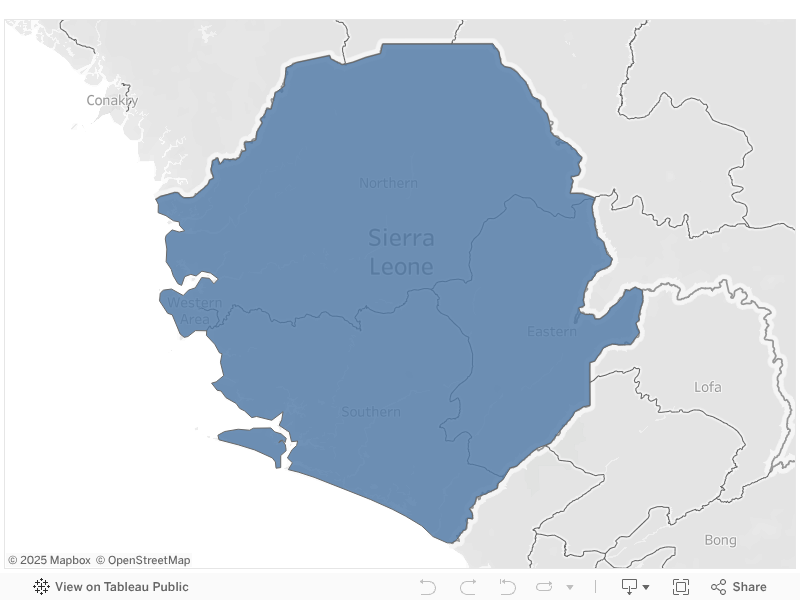
Sierra Leone is a small West African nation with a population of roughly 8 million people. Rich in natural beauty, cultural energy, and abundant resources. But behind the country’s potential lies a familiar struggle: an economy still leaning too heavily on a single sector. Agriculture has long been the backbone of national productivity, while mining, industry, and services often struggle to keep pace.
This structural imbalance has made Sierra Leone vulnerable, and nowhere was this more visible than in 2015, when the dual shocks of the Ebola outbreak and a collapse in global iron ore prices sent the economy into a tailspin. So, what exactly is going on beneath the surface? And what would it take to build a more resilient and diverse economy?
Agriculture consistently accounts for 50-63% of the GDP, leaving the nation vulnerable whenever farming seasons fail, prices fluctuate, or crises occur.
Industry is the most unstable sector, swinging wildly between 5% and 22%. And in 2015, it hit its lowest point, just 5% due to:
- The Ebola outbreak froze movement and production.
- A crash in global iron ore prices is forcing mining operations to shut down.
This year alone has exposed how dependent Sierra Leone’s industrial sector is on external forces.
Hovering between 28–36%, the services sector has been steady but sluggish, unable to compensate for weaknesses elsewhere. Together, these patterns reveal an economy that struggles to withstand shocks because it lacks balance.
A Way Forward: Building a Diversified Economy
If Sierra Leone wants long-term stability, it must diversify, plain and simple. That means:
- Strengthening industry
- Modernizing agriculture with value addition
- Expanding services and digital innovation
The proposed solutions are supported by real-world programs in Sierra Leone, confirming their credibility and feasibility.
- World Bank – Sierra Leone Economic Diversification Project
- Supports economic diversification beyond agriculture and mining.
- Strengthens SMEs, enhances value addition, and improves market access.
- Confirms agro-processing, service expansion, and SME support as national priorities.
- International Labour Organization – Opportunity Salone Programme
- Promotes youth entrepreneurship and job creation.
- Supports sustainable SME models and value chain development.
Validates the focus on integrating agriculture with industry.
The solutions are evidence-based, nationally aligned, partner-friendly, and feasible. But the question remains: how can Sierra Leone leverage these programs and data insights to fully unlock its economic potential?

by gme33 | Nov 15, 2025 | Dashboard, Visualization
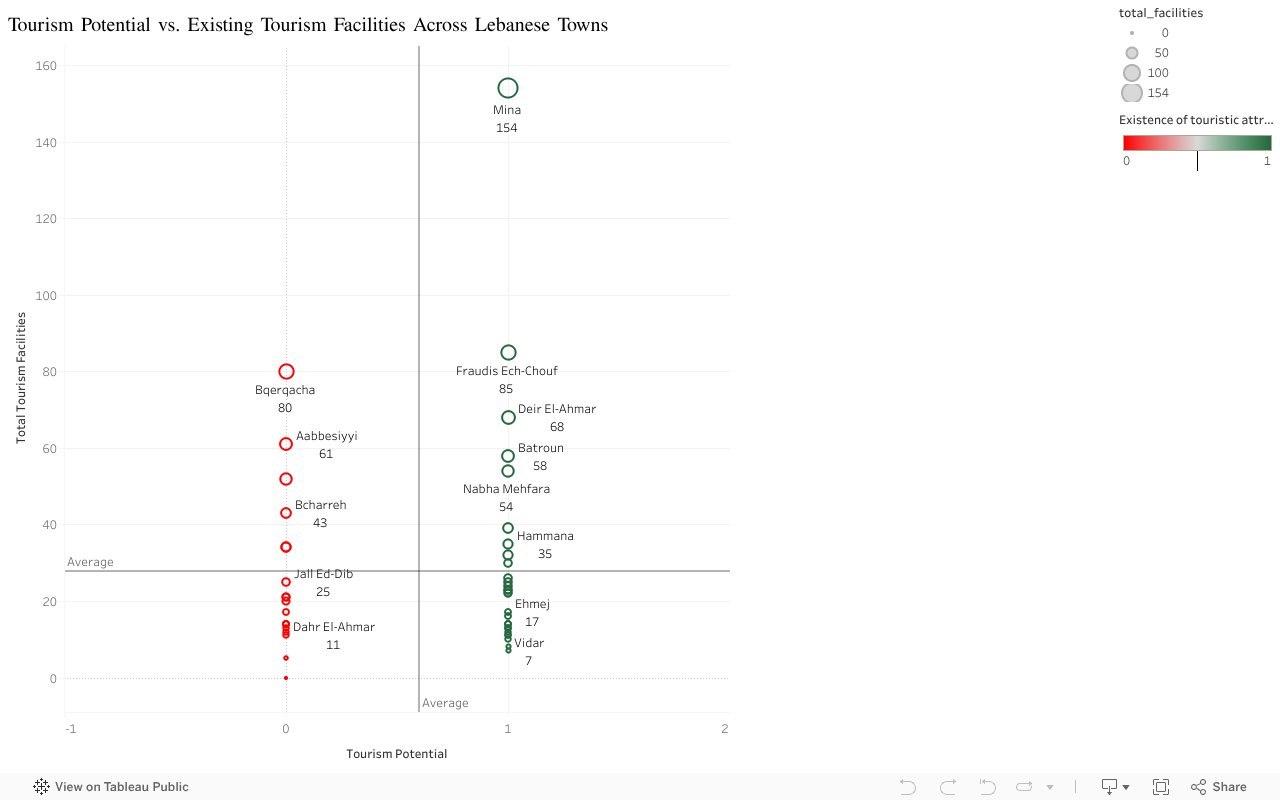
Lebanon is a country with immense tourism potential, boasting rich culture, stunning landscapes, and historical sites. However, not all towns are benefiting equally from this potential. This visualization compares tourism potential to existing tourism infrastructure across Lebanese towns, highlighting areas where growth could be nurtured and where existing facilities are already making an impact.
Lebanon’s tourism sector plays a vital role in its economy, offering opportunities for job creation, cultural exchange, and local development. However, many regions are underperforming in terms of tourism development, failing to fully capitalize on their natural and cultural assets. This post delves into the disparity between tourism potential and existing tourism facilities across Lebanon’s towns.
Using a visualization that compares the number of tourism facilities to their respective tourism potential, we aim to identify regions that could benefit from additional investment and infrastructure development.
What Does the Data Tell Us?
This visualization plots each Lebanese town based on two key factors:
-
Tourism Potential: A measure of the town’s attractiveness for tourism, considering factors like natural beauty, cultural significance, and historical sites.
-
Existing Facilities: The number of established tourism-related services such as hotels, restaurants, and attractions available to tourists.
By comparing these two aspects, we gain insights into which towns are thriving and which ones are still underdeveloped in terms of tourism infrastructure.
Key Insights:
-
Mina: The Top Performer
Mina emerges as the clear leader, with a remarkable tourism potential score of 154, accompanied by 80 existing facilities. This combination makes Mina a strong hub for tourism in Lebanon, ready to attract and serve visitors effectively.
-
Underserved Towns with High Potential:
Some towns show a significant gap between their tourism potential and the number of available facilities. For instance, Aabeyssi (potential score: 61) and Baalbek (potential score: 52) have good tourism prospects but still lack sufficient infrastructure to meet demand. Investment in these towns could lead to substantial growth in Lebanon’s tourism sector.
-
The Struggling Towns:
At the other end of the spectrum, towns like Aarsfiq (with a potential score of only 5) show a clear lack of infrastructure and limited tourism prospects. These regions face challenges in attracting visitors without significant investment and development in tourism services.
-
Towns With Balanced Growth:
Towns such as Fraudis Ech-Chouf and Deir El Ahmar are performing reasonably well, having both a decent number of facilities and moderate tourism potential. These towns can build on their existing foundations to enhance their tourism offerings further.
Conclusion:
The gap between tourism potential and existing facilities across Lebanese towns presents both challenges and opportunities. While some towns are already strong players in the tourism sector, others have untapped potential waiting to be unlocked with the right investments in infrastructure and tourism services.
By addressing these disparities, Lebanon can ensure that more regions share in the benefits of tourism, fostering economic growth and preserving the rich cultural heritage of the country.
Call to Action:
Local municipalities and private investors can use this data to identify key areas where tourism facilities need improvement. With strategic planning, these towns could transform into major tourism destinations in Lebanon, contributing to the country’s broader economic recovery and development.