by tmt19 | Nov 20, 2025 | Dashboard, Team Project, Visualization
Launching La Table is more than opening a restaurant, it’s making a meaningful, long-term investment. With limited savings, choosing the wrong location would turn a dream into a risk. To avoid guessing, I turned to data.
The goal was simple: find a town in Lebanon where visitors (locals and tourists) already show strong interest, yet the restaurant market remains underserved.
Lebanon’s tourism and investment patterns often move in opposite directions. Some towns attract visitors but receive no development, while others receive projects despite having little demand.
For a new restaurant, this imbalance makes it difficult to know where genuine opportunity lies. I needed a location that is not saturated or speculative, but strategically overlooked.
Step 1: Scanning the Chaos for Opportunity – Lebanon as a whole
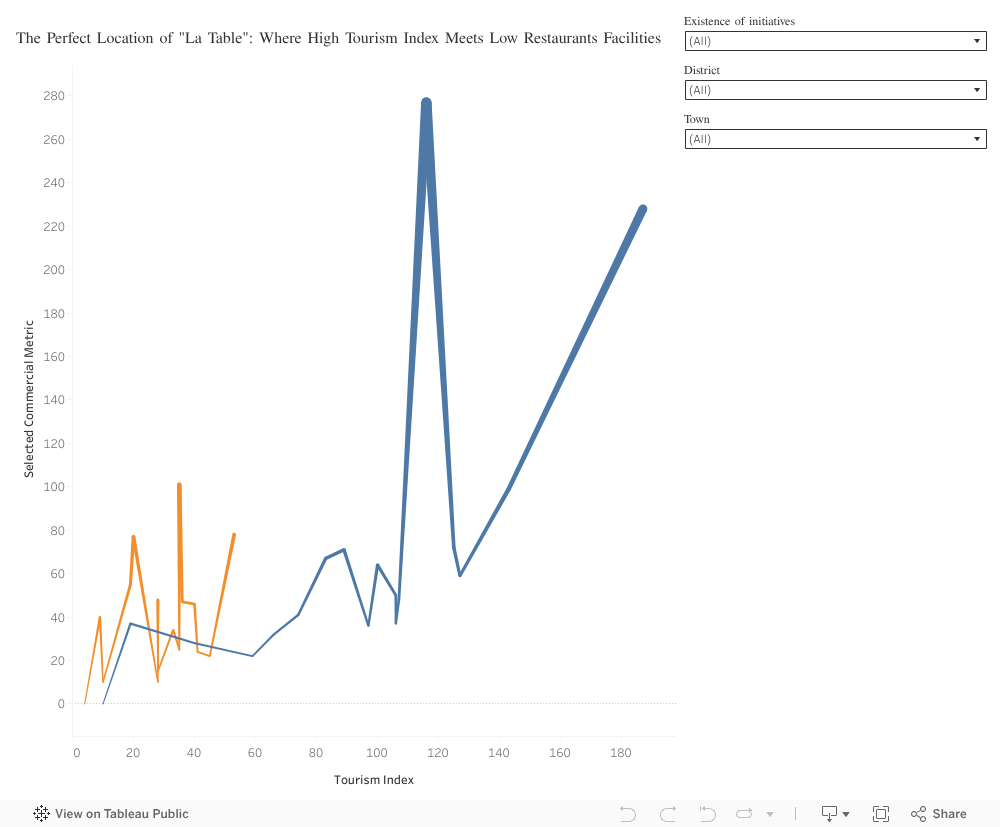
The national view shows two categories:
High-tourism towns with no initiatives (Blue): attractive but saturated with existing restaurants.
Funded towns with low tourism (Orange): received investments but struggle with attracting visitors.
We’re looking for a true blue diamond: a high-potential (human intuition), high-traffic location (tourism index), with unserved demand (number of restaurants, 0 project initiated).
Step 2: The first zoom – Targeting Zgharta
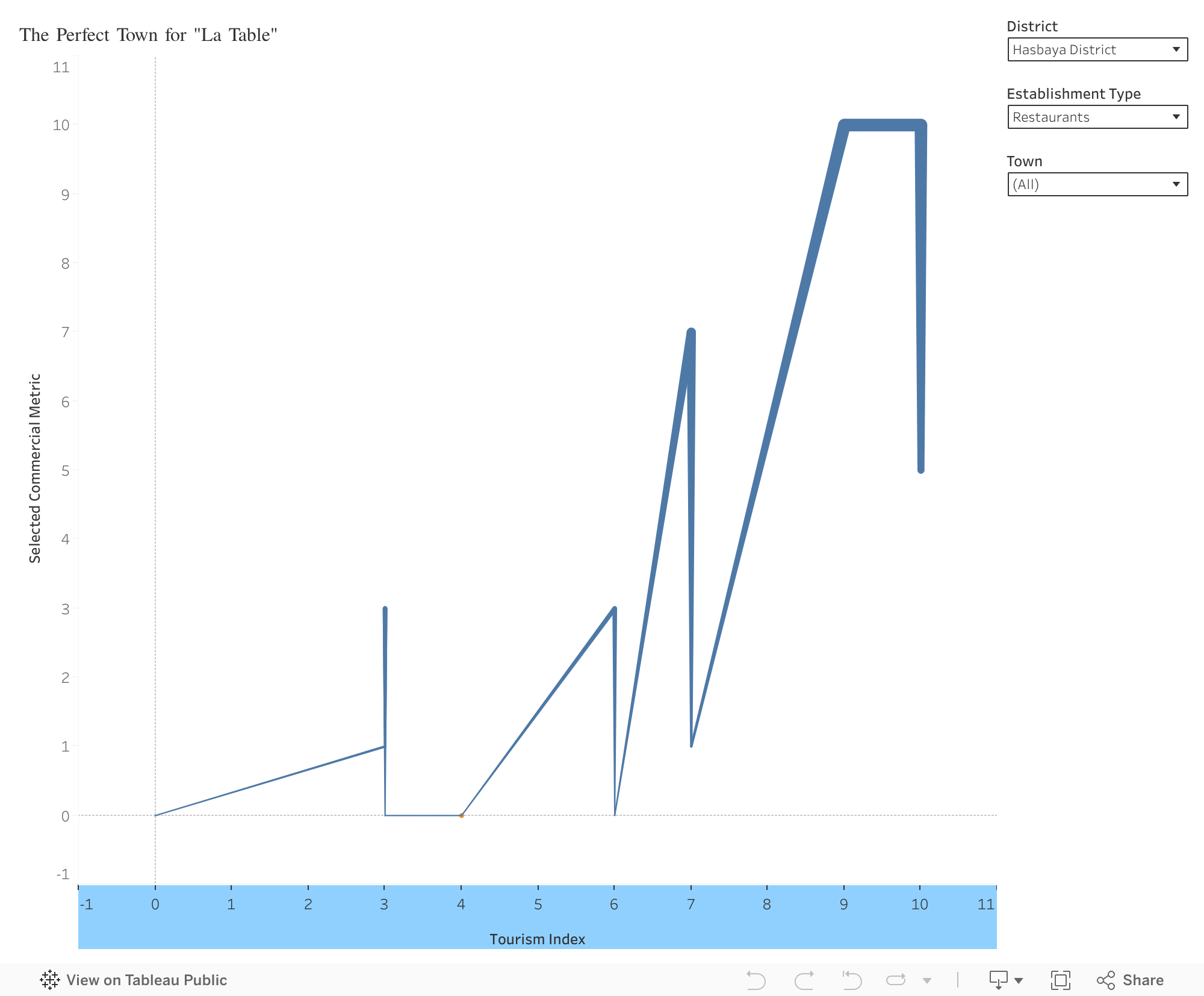
We must narrow the focus from the whole country to a high-potential region. We start by targeting the beautiful Zgharta District.
Safe option: a district away from saturation (low competition) yet rich in natural beauty and tourism interest (mid to high). It becomes the logical next step for deeper exploration.
(Action for Viewer: Please use the District filter and select Zgharta District.)
Step 3: The second zoom – Finding the Restaurant Gap
One town rises above the rest:
Beit Obeid, Zgharta District
- High tourism demand (index: 9).
- Low supply: few restaurants exist (1 restaurant), minimal competition.
- No recent initiatives, meaning the opportunity remains untouched.
Visitors are already coming, but the market has not responded. This is exactly the type of gap a new restaurant should fill.
In Beit Obeid, high demand, low competition, and authentic natural beauty come together, making it a place where La Table can truly belong and elevate the town’s charm. By moving from a national overview to a focused district analysis, the data revealed a location where potential and opportunity meet.
But beyond numbers, choosing Beit Obeid reflects vision, intuition, and respect for place.
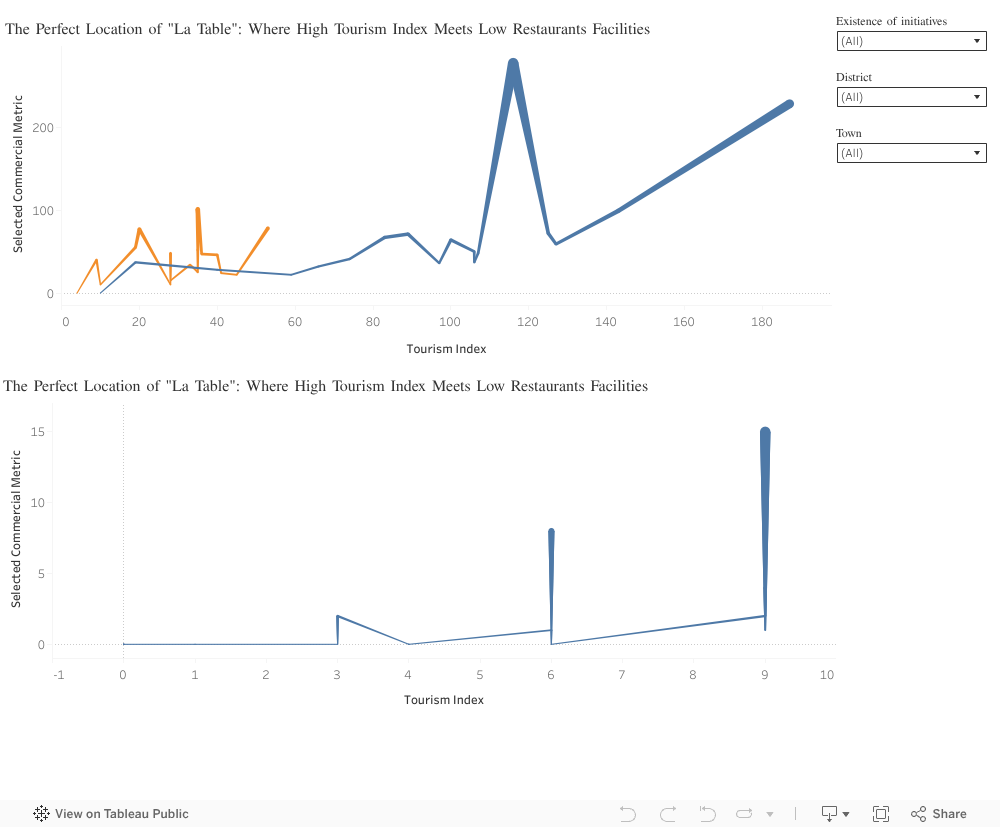
Overall view:

by hhm26 | Nov 7, 2023 | Uncategorized
As part of the United Nations Sustainable Development Goals (SDG’s). Goal 8 is focused on “Promoting sustained, inclusive and sustainable economic growth, full and productive employment and decent work for all”. In the city of Beirut, a group of us within the Lebanese ministry of tourism were teamed up with a group of people from the UN development program, and we were tasked to focus on SDG Goal 8.
We were thinking about a pressing challenge in the situation we are in now: if Lebanon is perceived as a tourist destination. Potential tourists/visitors to Lebanon always have something stopping them from visiting Lebanon, especially those who do not know much about it and have not visited it before.
These perceptions were highly influenced by the way the media portrays Lebanon with all its economic and political instabilities. We questioned what we could do to change this narrative, and how could we shift people’s perceptions of what Lebanon is to influence them to travel to this country full of rich culture and breathtaking landscapes.
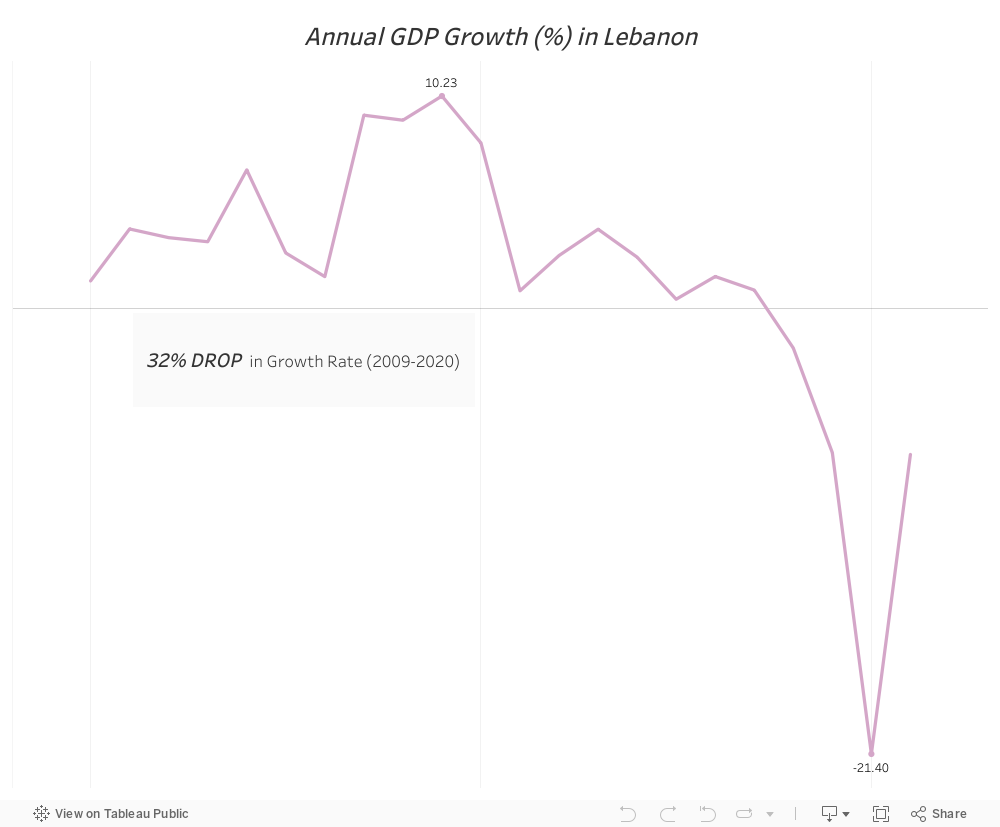
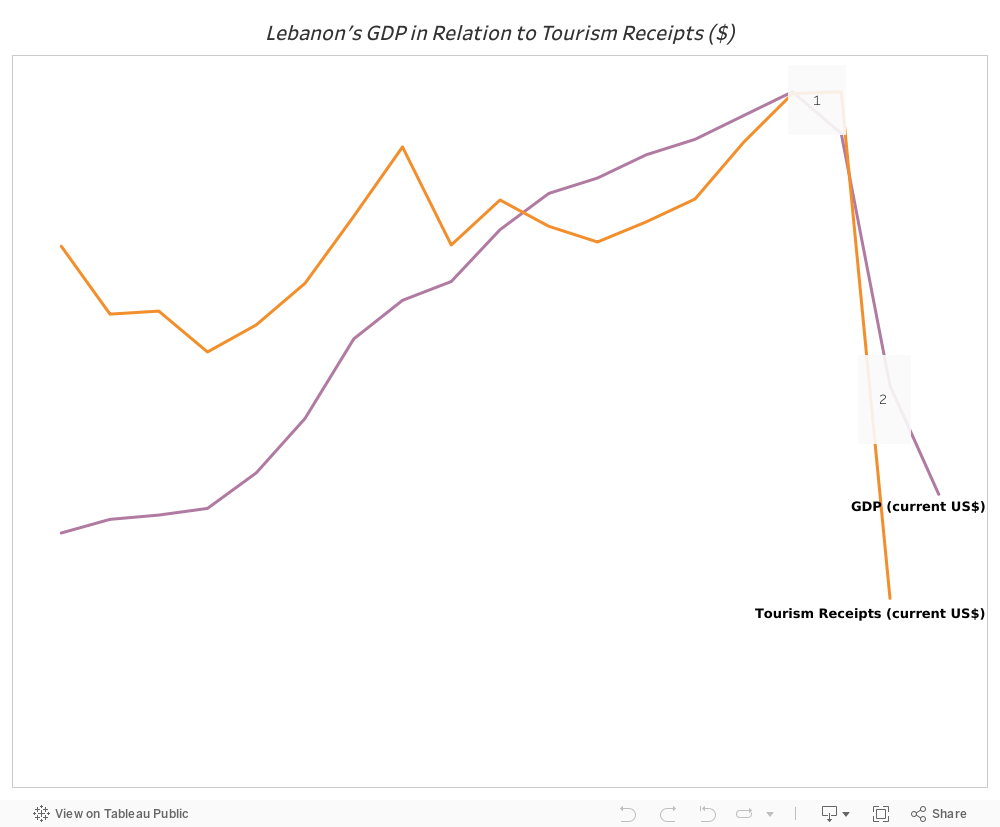
The graph above shows the change in Lebanon’s GDP over the years, indicating a sudden fall after 2019. In the economic situation which we are currently in, Lebanon needs something to help revitalize this situation and help it grow again. For that reason, we launched a program to revitalize the Lebanese economy through tourism enhancement.
We analyzed several sources of data and came up with the visualization under. The visualization indicates there is a direct correlation between Lebanon’s GDP and tourism receipts. Up till 2018 and 2019 (shaded 1), we see Lebanon’s GDP and tourism receipts both at their highest points. After those years, we see a sudden drop in 2020 in both indicators (shaded 2).
For this reason, we did the following:
We invited travel bloggers, and social media influencers from around the world and we specifically targeted those with a large amount of following and influence. The goal of this was not to bring them so that they could showcase Lebanon to their following base. The goal behind this was to immerse them in the Lebanese culture and the activities and experiences they will cherish from being in Lebanon. That way, what they share with their audience is authentic, and true to the emotions they felt.
We also targeted other areas of improvement which were important for the success of the project. Those are regarding: infrastructure, marketing, and local community involvement. We coordinated with municipalities, as well as local businesses to ensure that all our key points are addressed to enhance the tourist experience in our country. We think that our concentrated efforts to enhance the tourism experience and actively include local communities are what will be responsible for revitalizing the Lebanese economy in the right direction again. In addition to stimulating the travel and tourism industry, our project will potentially have a positive knock-on effect on the whole economy, generating jobs and encouraging sustainable growth.